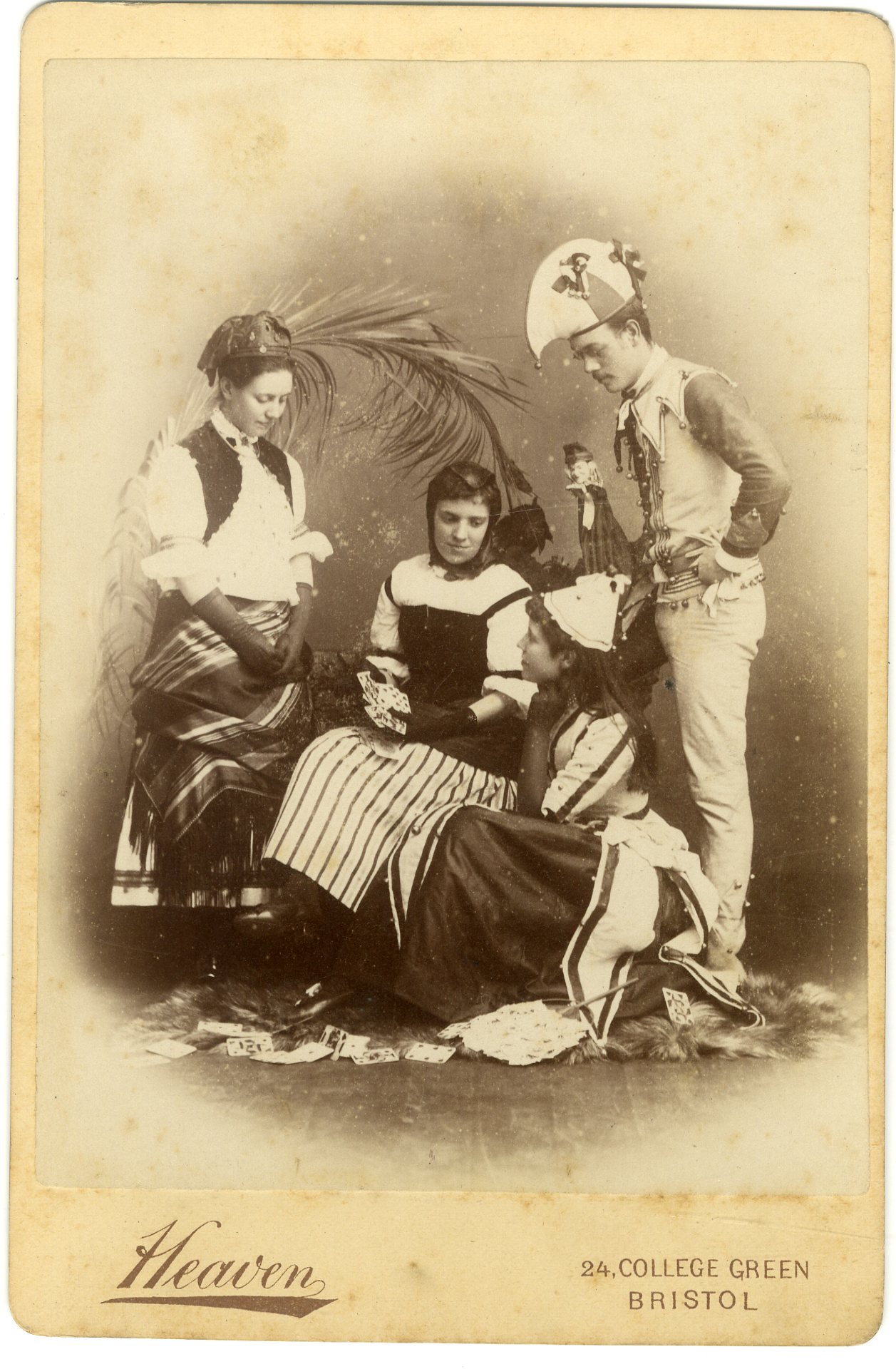
Per17. R. Archibald Heaven, Bristol. “Mr. Punch,” in manuscript on verso. Man at right stands with a Mr. Punch puppet, ladies are focused on the playing cards. Cabinet Card. VG. $75
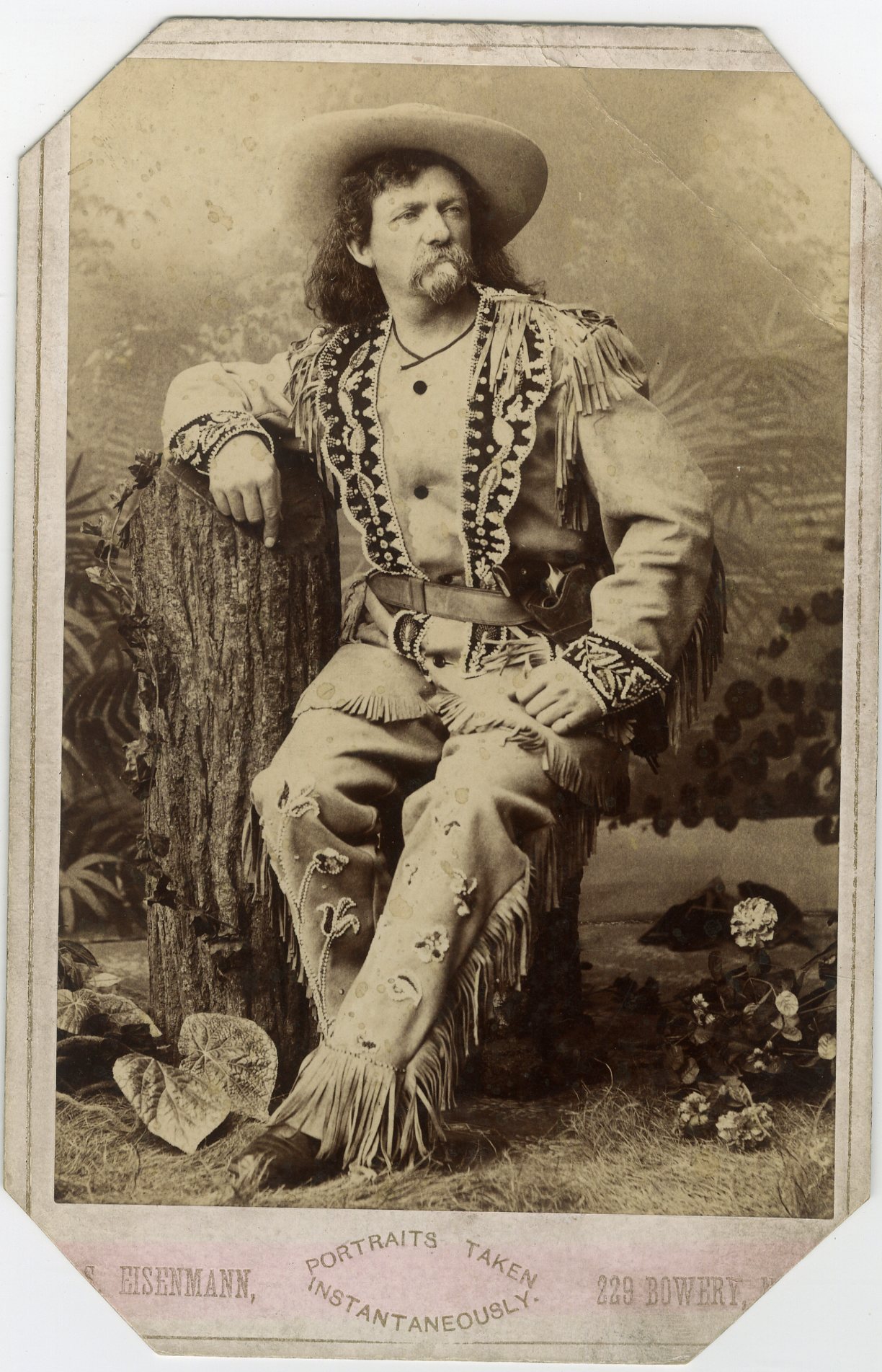
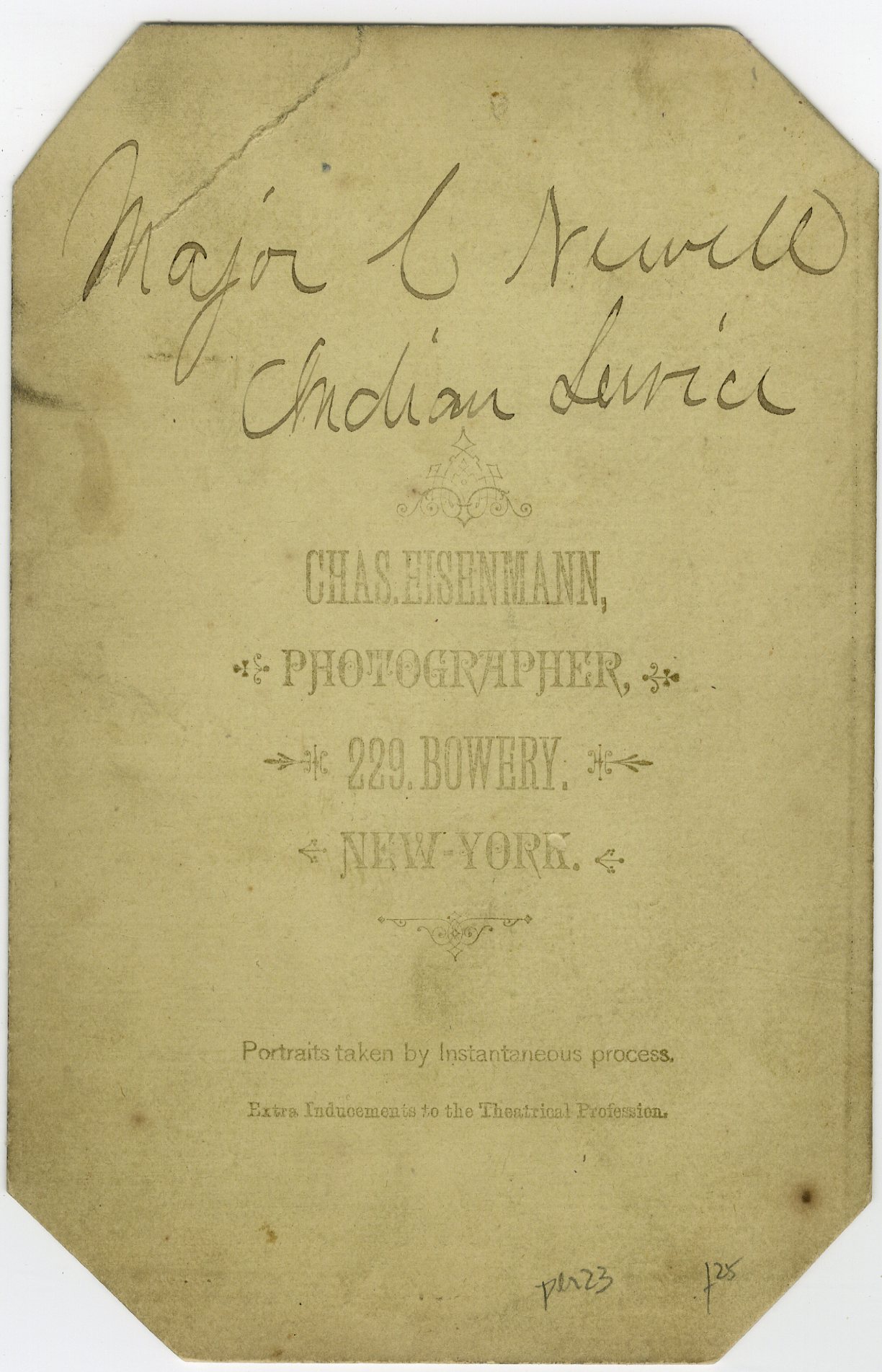
Per23. Chas. Eisenmann, NY. Major Cicero Newell (Aug. 12, 1840-Dec. 1913), formerly of the 10th Michigan Cavalry. From the Civil War Database: Residence Ypsilanti MI; 21 years old. Enlisted on 4/20/1861 at Ypsilanti, MI as a Sergeant. On 5/1/1861 he mustered into “H” Co. MI 1st Infantry. He was Mustered Out on 8/7/1861 at Detroit, MI. On 10/14/1861 he was commissioned into “D” Co. MI 3rd Cavalry. He was discharged on 10/12/1863. On 10/13/1863 he was commissioned into Field & Staff MI 10th Cavalry. He was discharged on 1/6/1865. He was listed as: * Wounded 2/20/1863 (place not stated). Promotions: * 1st Lieut 9/7/1861 * Capt 4/1/1862 (As of Co. K) * Major 8/19/1863. Intra Regimental Company Transfers: * 3/15/1862 from company D to company K. Other Information: Buried: Lone Fir Cemetery, Portland, OR. (Superintendent State Reform School for Boys at Seattle, WA). He was an Indian agent in Dakota Territory at one time and authored at least one book on Indians. Great decorative outfit, pistol at his waist. Corners clipped, a crease at top right. Cabinet Card. G. $450
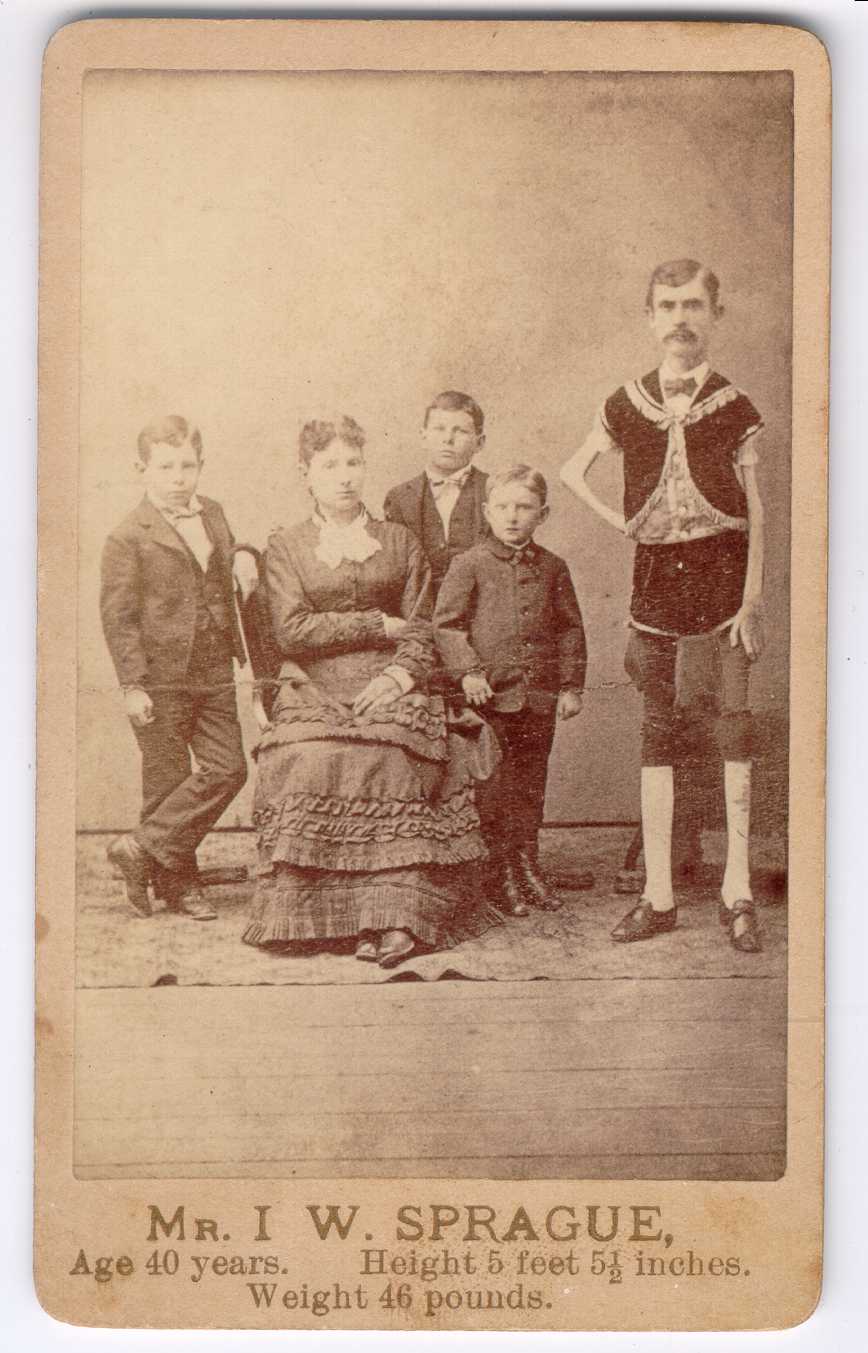
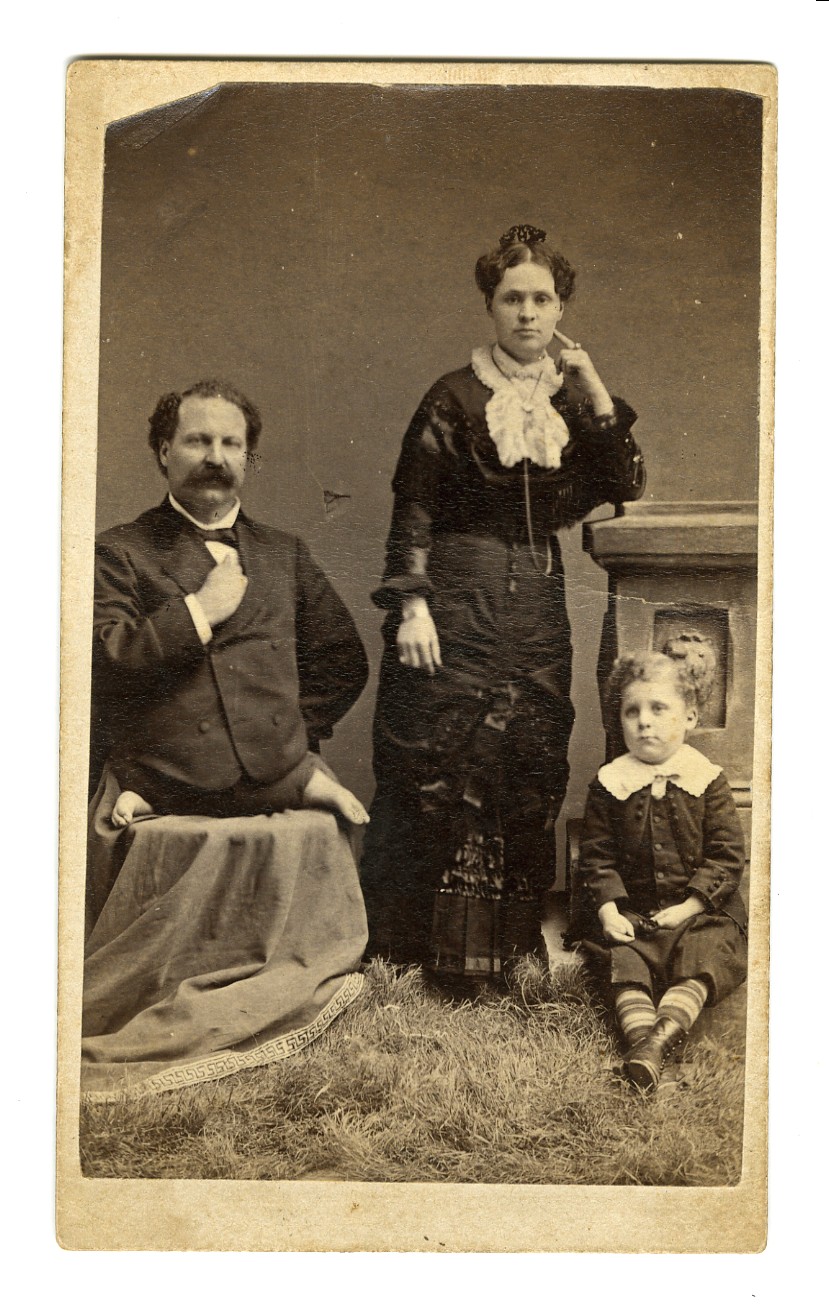
Odd128. A. Newman, Philadelphia. Eli Bowen, Wife and Child. CDV. VG. $125
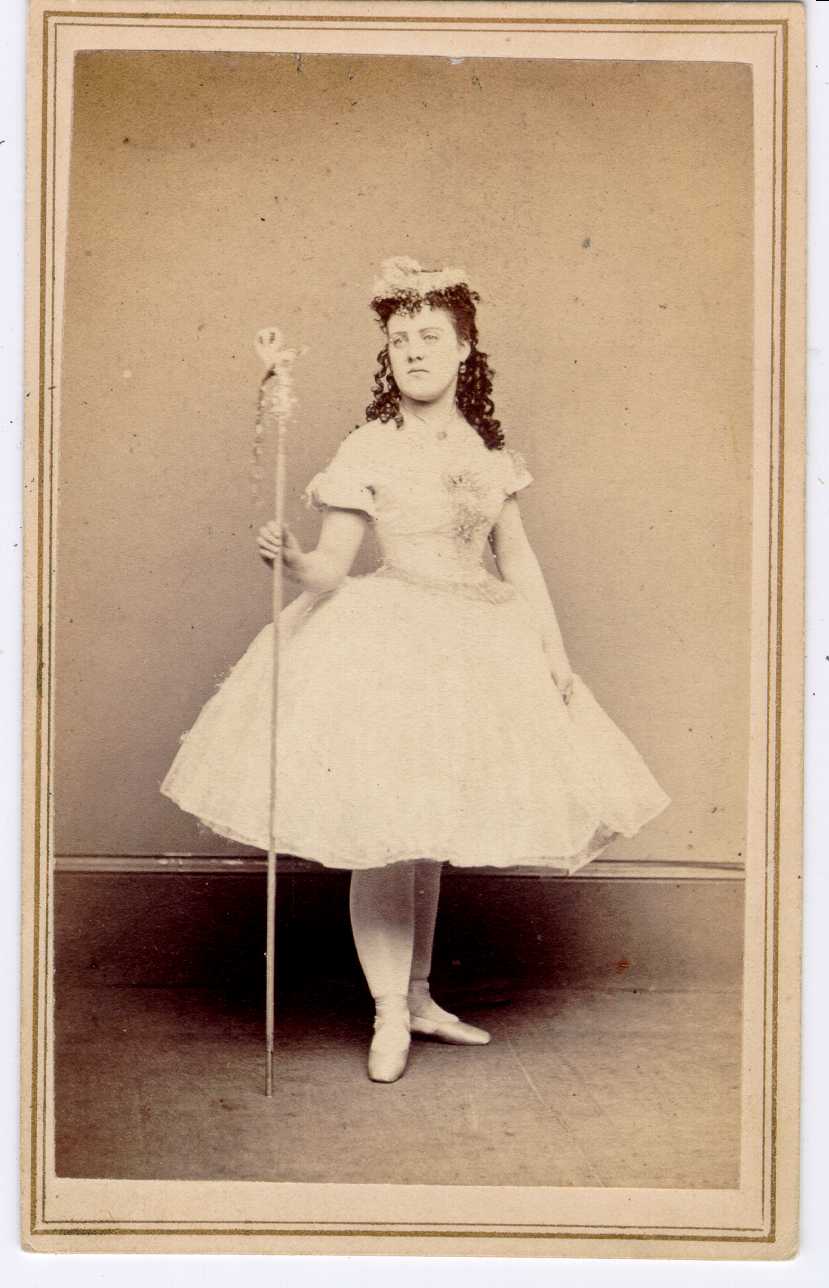
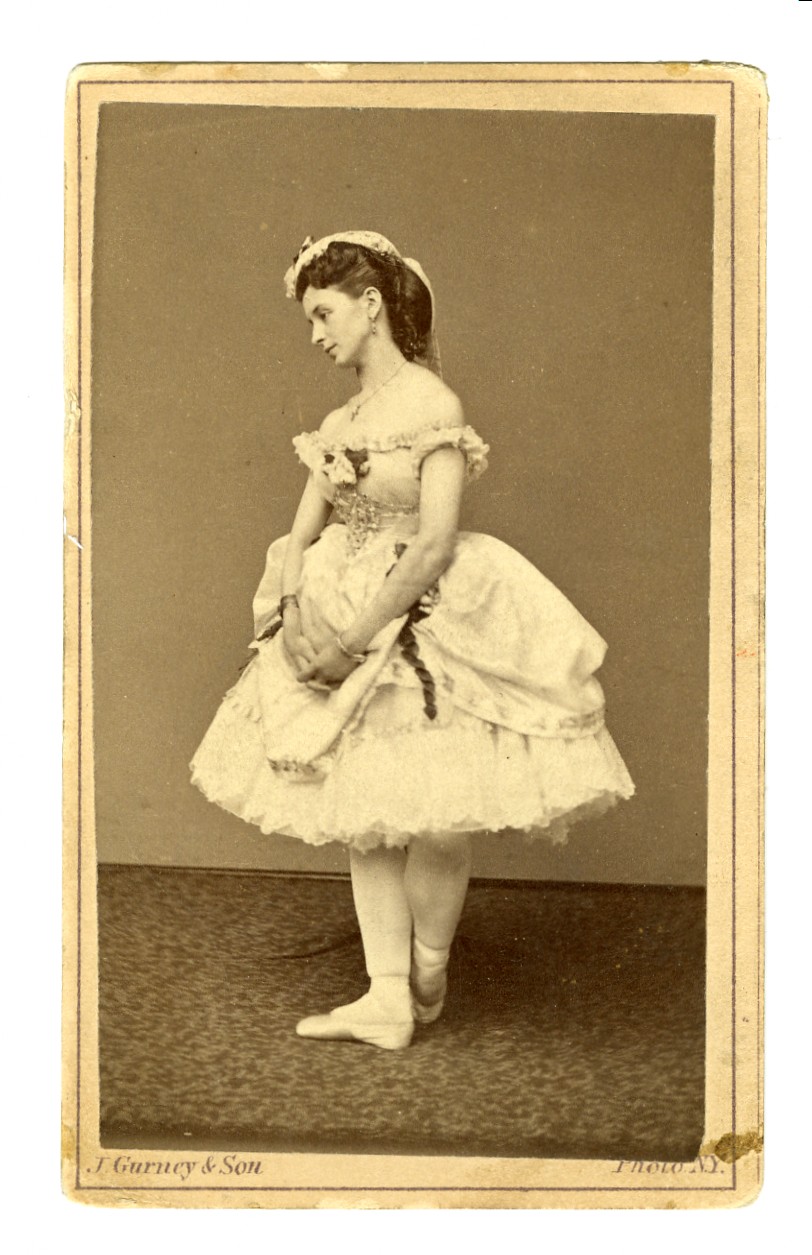

Per37. J. Gurney & Son, NY. Marie Bonfanti (Feb. 16, 1845 – Jan. 25, 1921) was a 19th century ballet dancer, born in Milan, who went to America in 1866 as the prima ballerian assoluta (a billing she always insisted upon in her contracts) and appeared in her New York City premiere in The Black Crook at Niblo’s Garden on September 10, 1866. She toured the US and appeared in several musical revues, including The White Fawn, the follow-up to The Black Crook. She was prima ballerina of the Milan Italian Grand Opera Company which toured the US; and was prima ballerina of the New York Metropolitan Opera House (1885-6). CDV. VG. $125
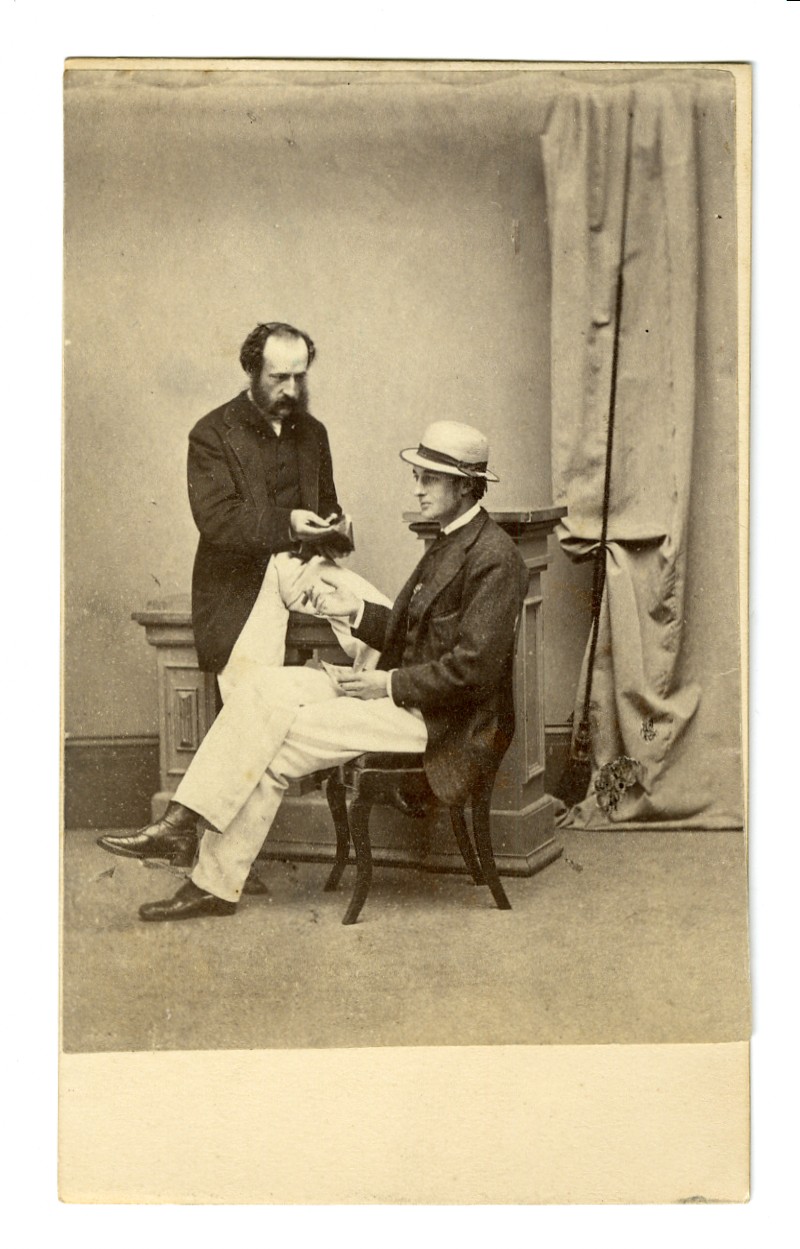

Per43. Critcherson & Storer, Newport, R.I. The man at left seems to be offering something to the seated man. 3-cent tax stamp on verso. CDV. VG. $50
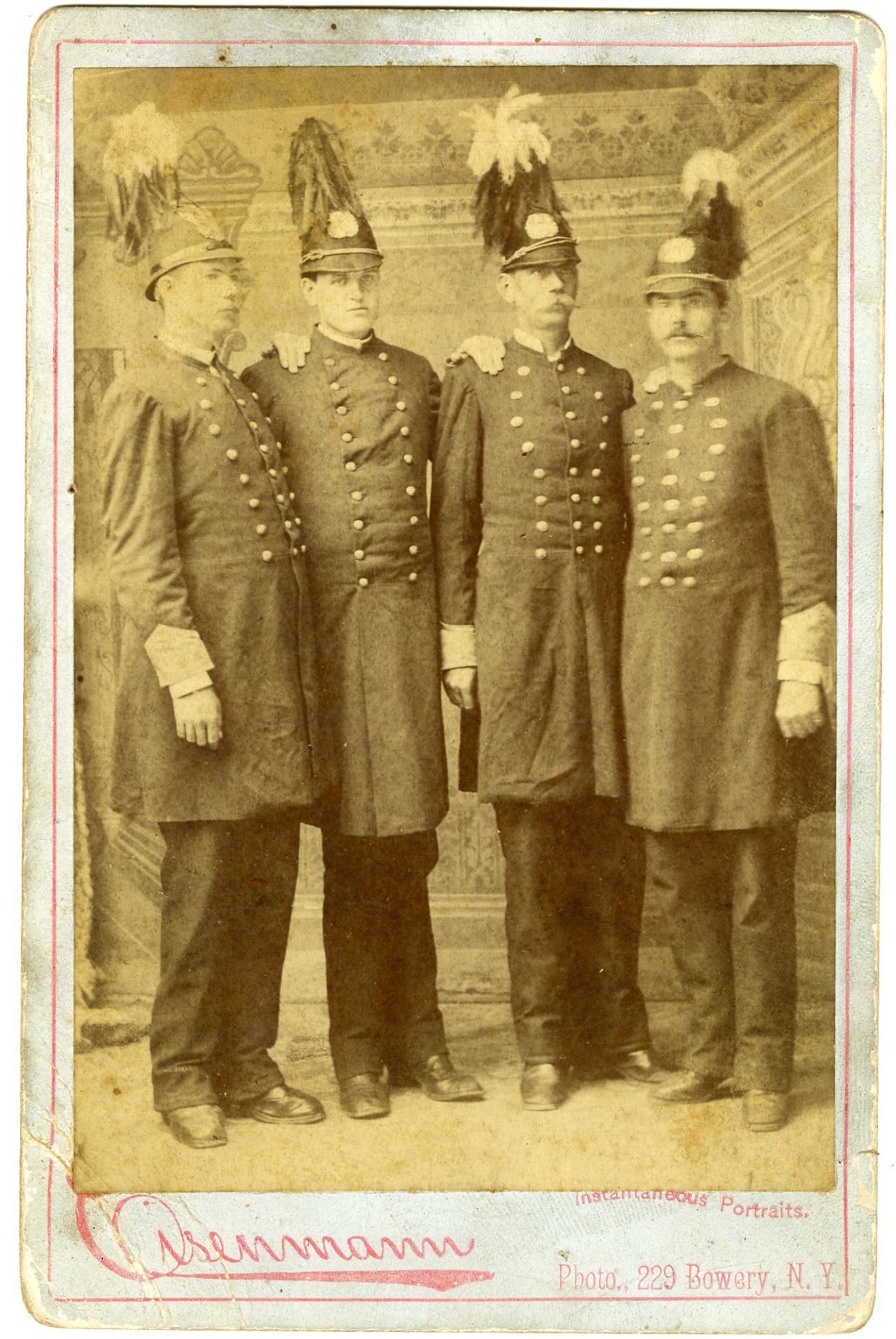

Odd162. Eisenmann, NY. On back is written “Barnum’s Show, Hannibal 1885 The Giants.” These are the Texas Giants, The Shields Brothers, Shady, Guss, Frank & Jack. Bottom left corner has a crease. Cabinet Card. G. $85

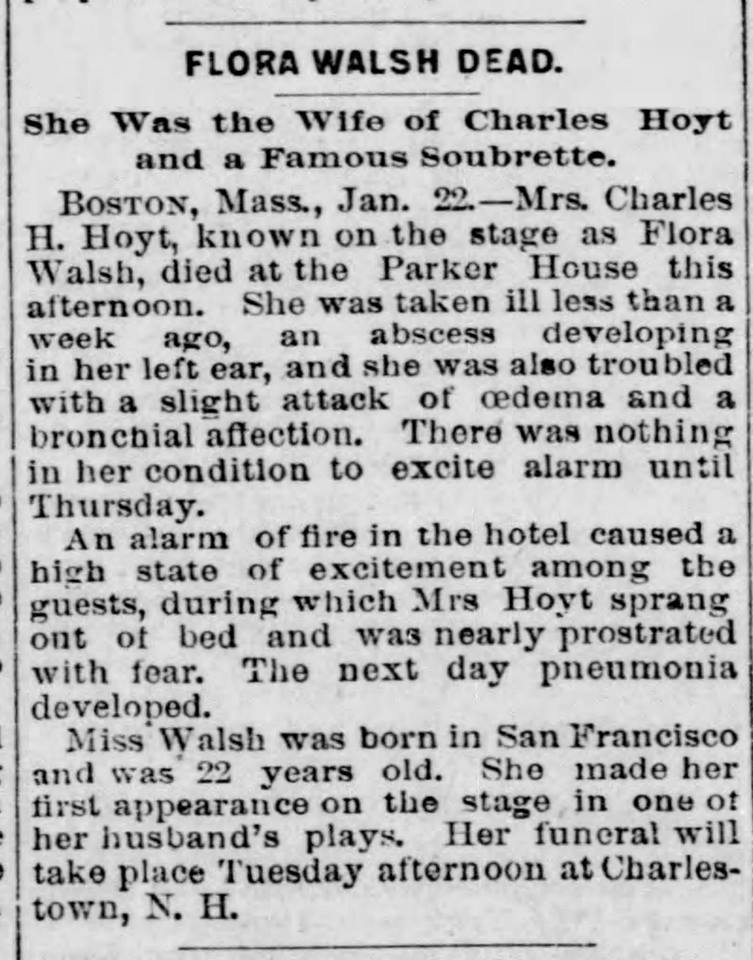
Per66. Baker, Columbus, O. Cabinet Card of Flora Walsh. Flora Walsh was the stage name of Mrs. Charles H. Hoyt. She was born in San Francisco and died at age 22. E. $250
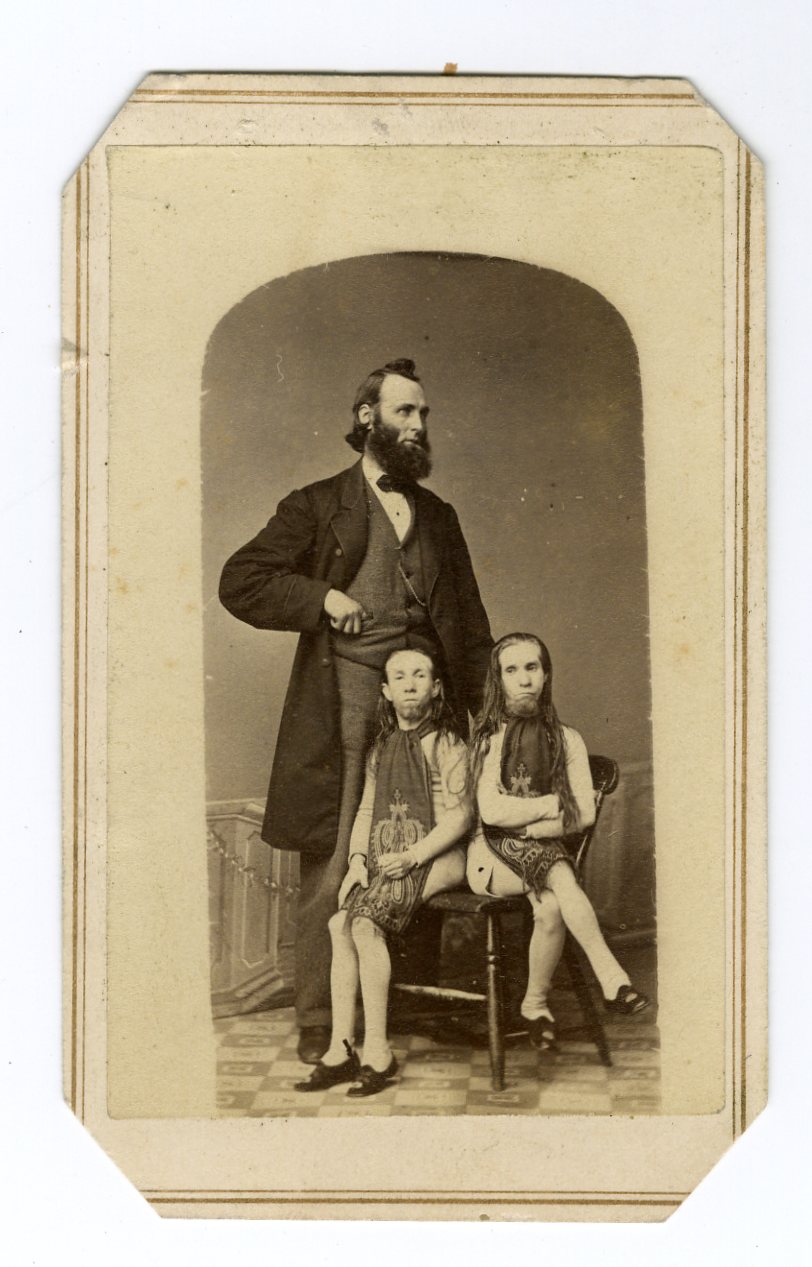

Odd210. W.W. Mitchell’s National Photographic Gallery, St. Joseph, Mo. CDV of Waino & Plutanor, aged about 50 years; weight 45 pounds each. Shown with their manager. Corners clipped. VG. $125
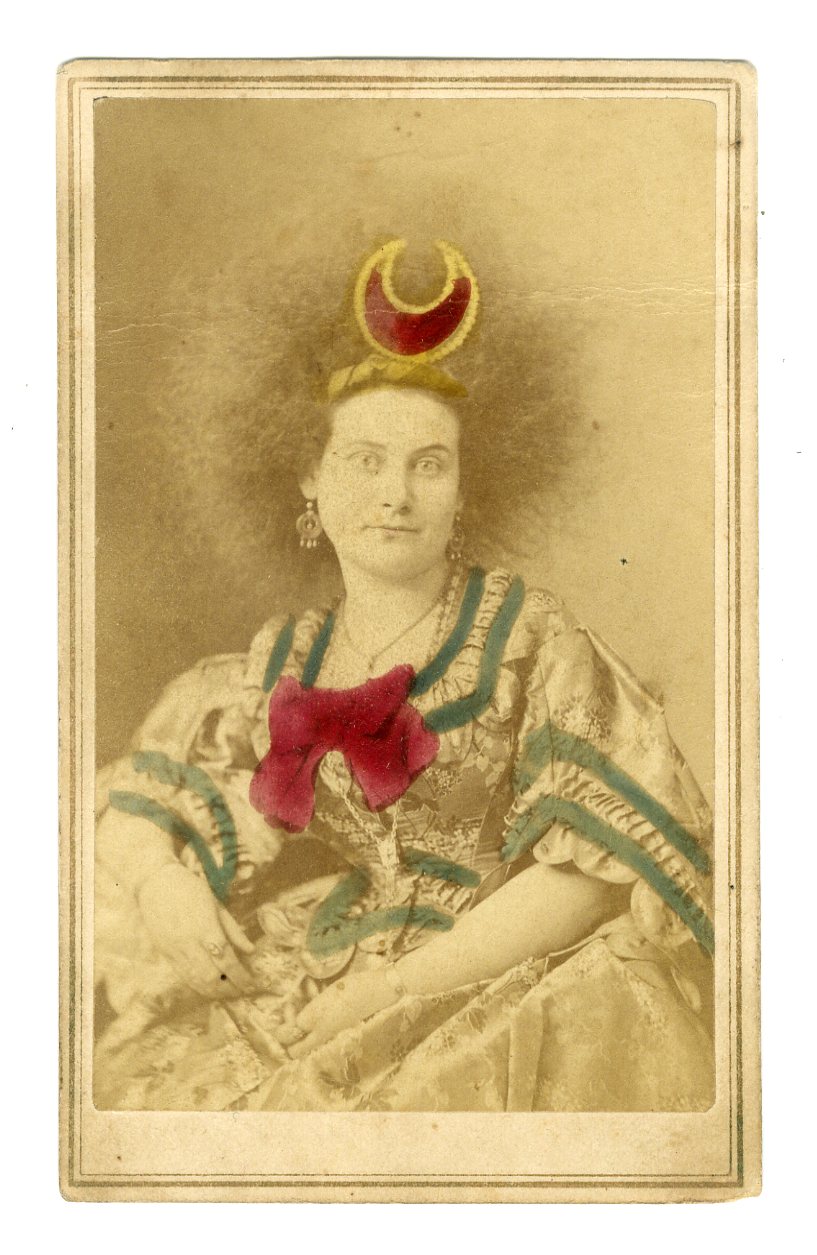
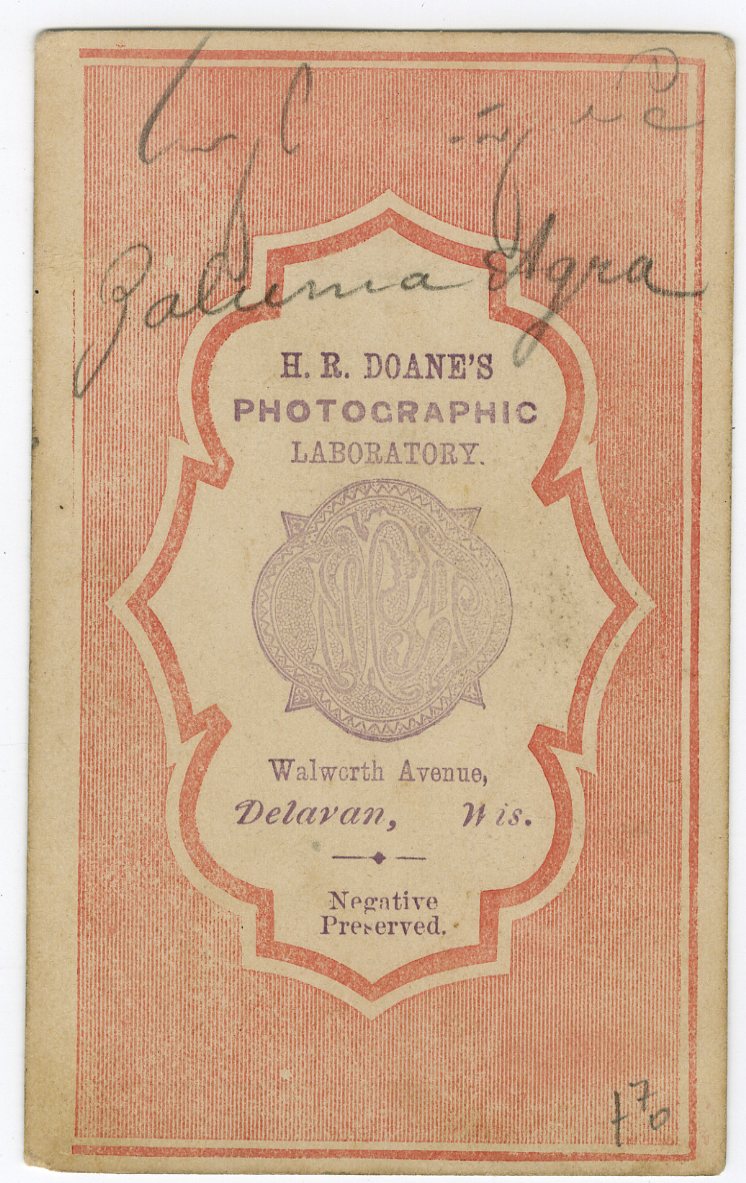
Odd211. H.R. Doane’s Photographic Laboratory, Delavan, Wis. CDV of Galunia Agra. Tinted. G. $75
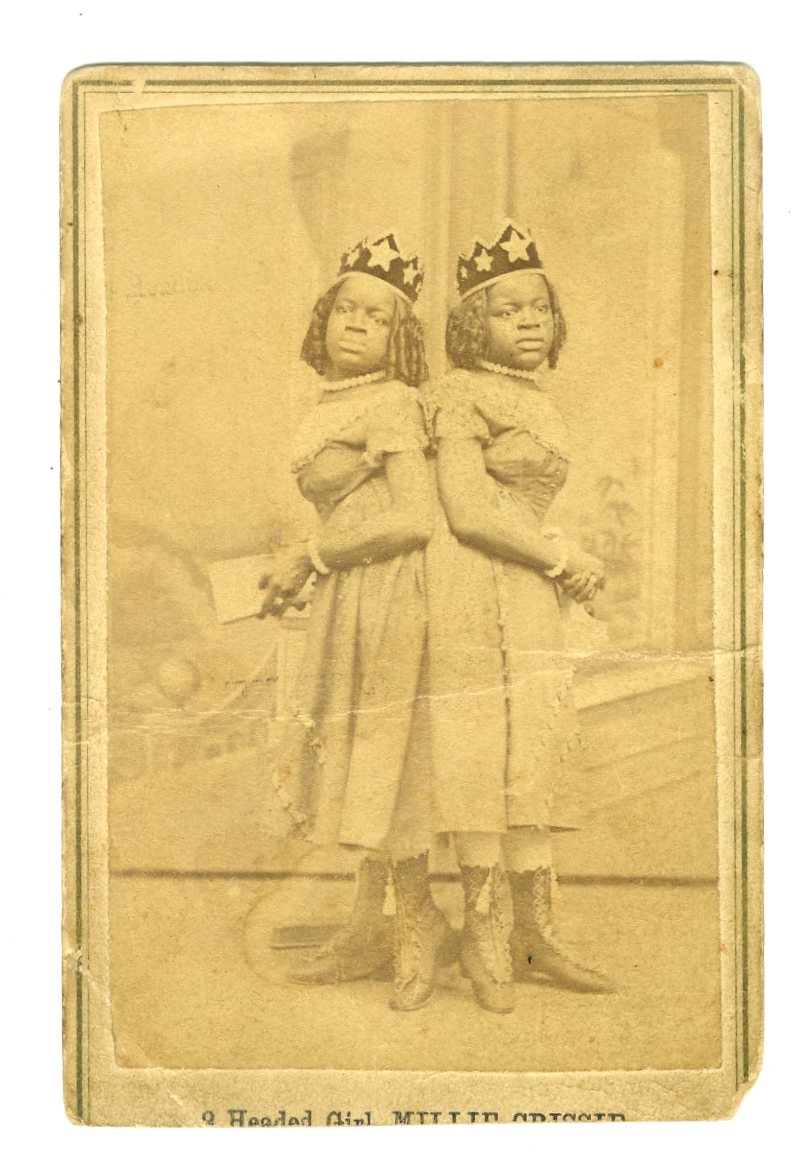

Odd214. J.H. Fitzgibbon, St. Louis. 2-Headed Girl, Millie Crissie. Couple soft creases but card is firm. Trimmed at bottom. CDV. G- $300
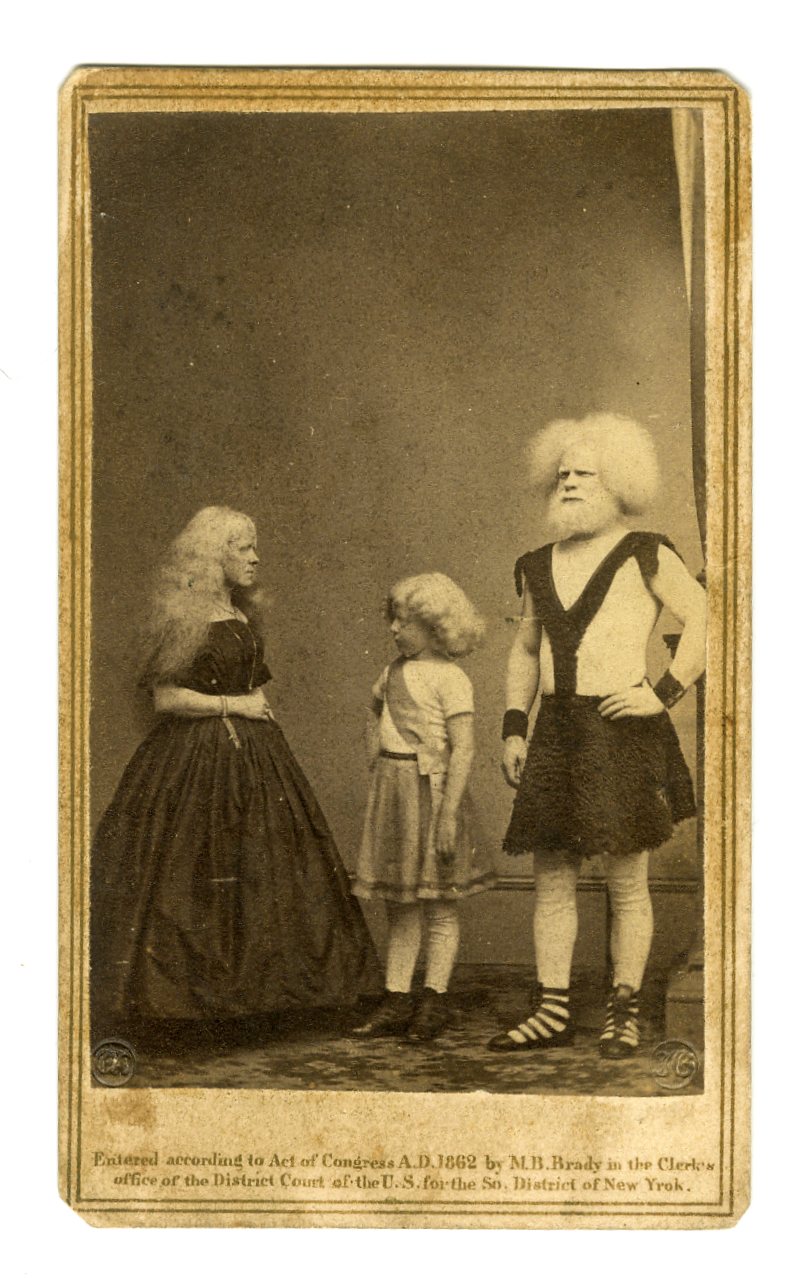
Odd215. Photographic negative from Brady’s National Portrait Gallery, published by E&HT Anthony. Albino family. Brady’s 1862 copyright line bottom recto. CDV. G. $150
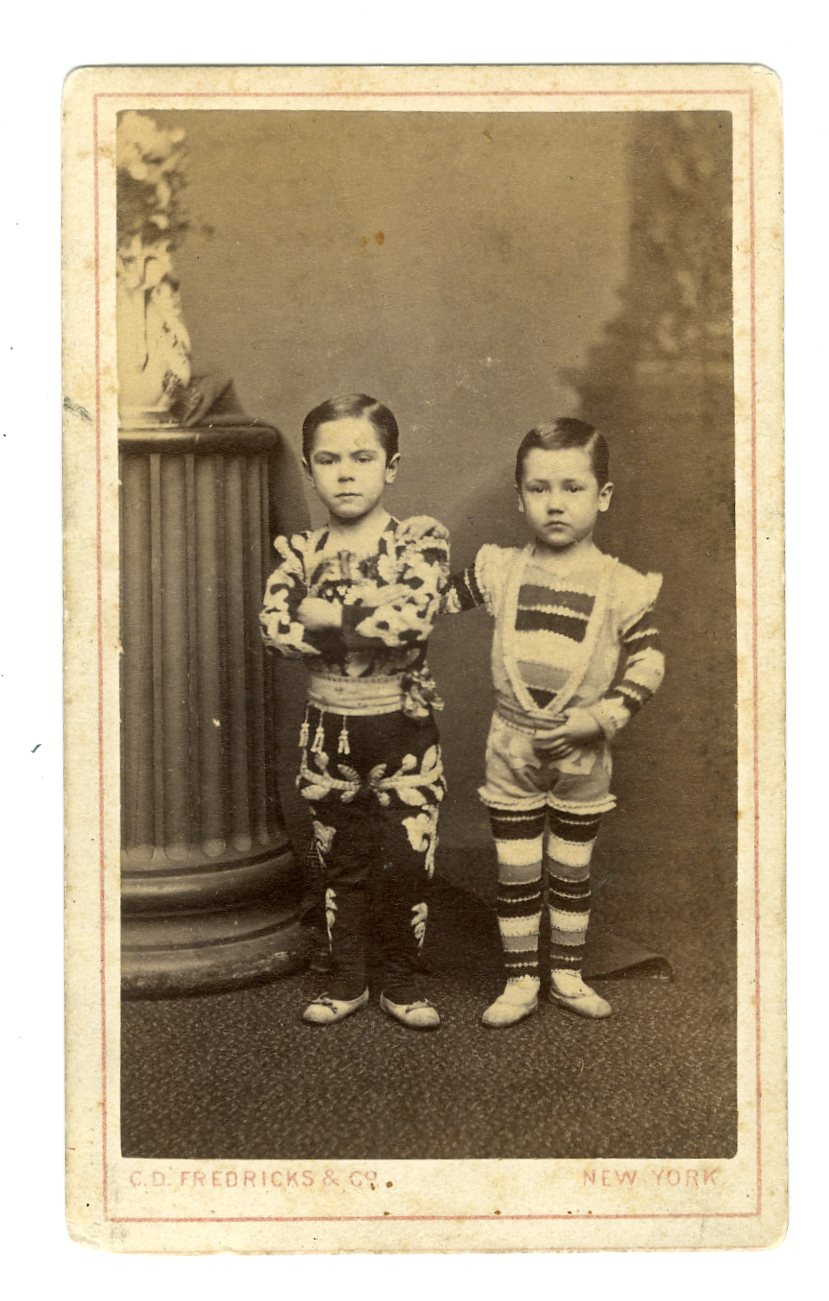
Per83. C.D. Fredricks & Co., NY. Unidentified pair of young performers. CDV. VG. $50
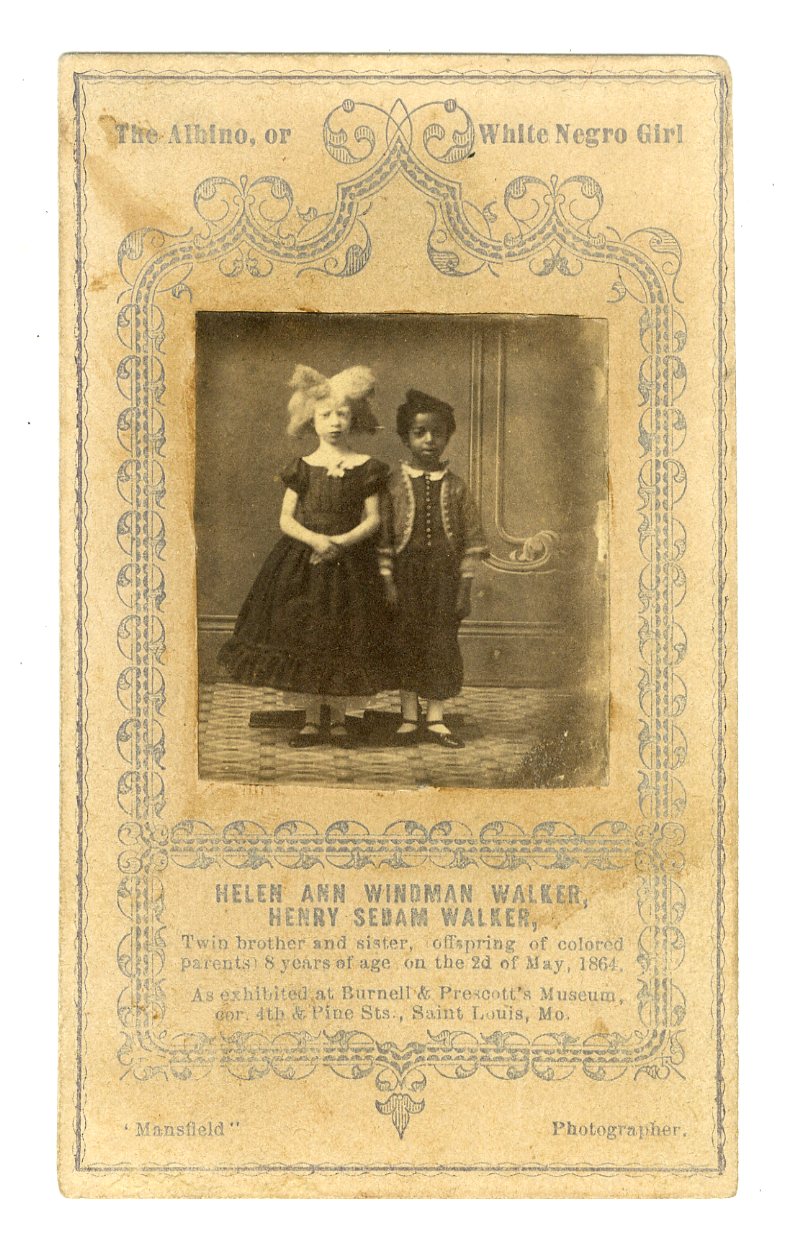
Odd232. Mansfield, photographer. The Albino, or White Negro Girl. Helen Ann Windman Walker, Henry Sedam Walker, Twin brother and sister, offspring of colored parents. 8 years of age on the 2d of May, 1864. As exhibited at Burnell & Prescott’s Museum, cor. 4th & Pine Streets, St. Louis, Mo. CDV. VG. $1200
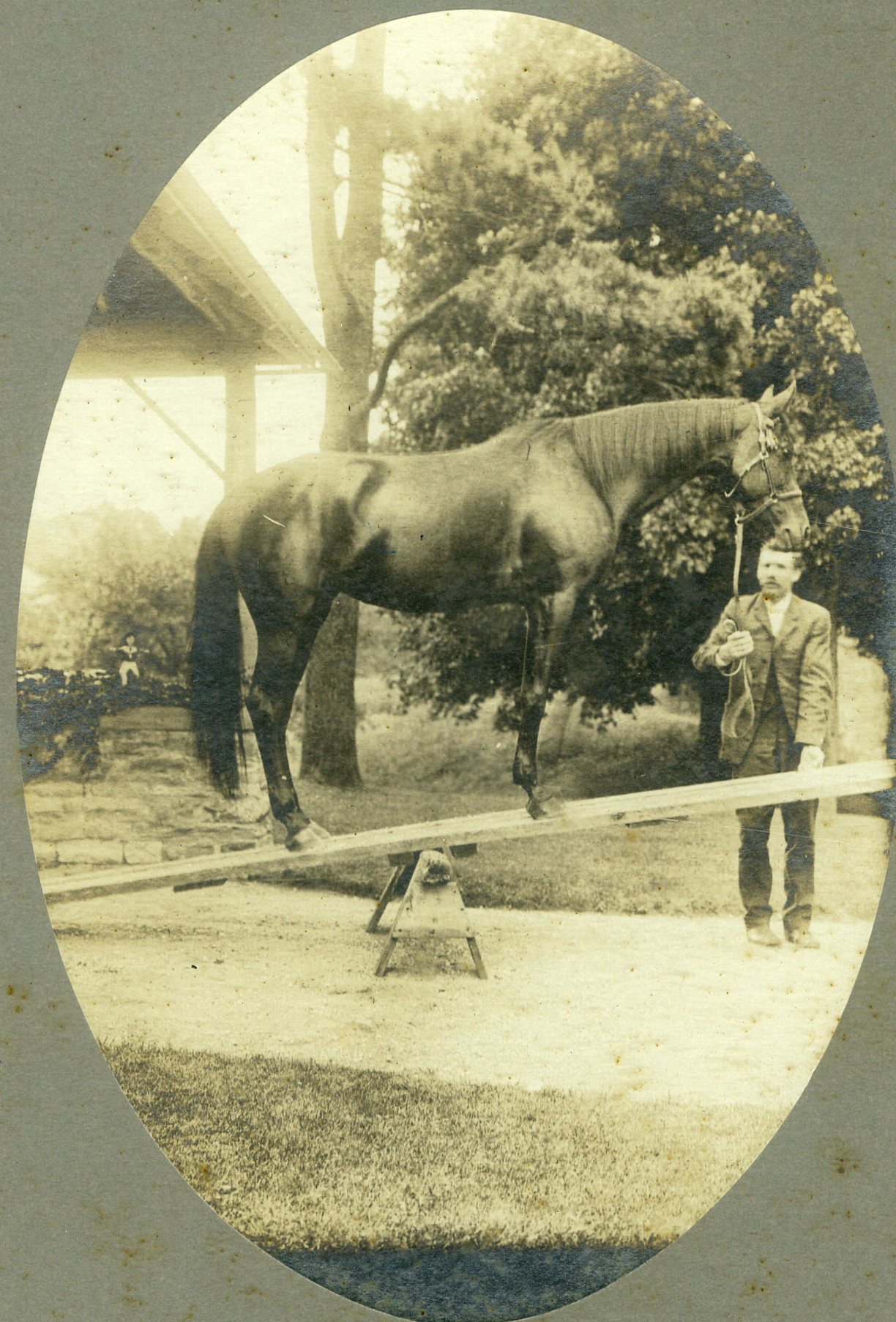
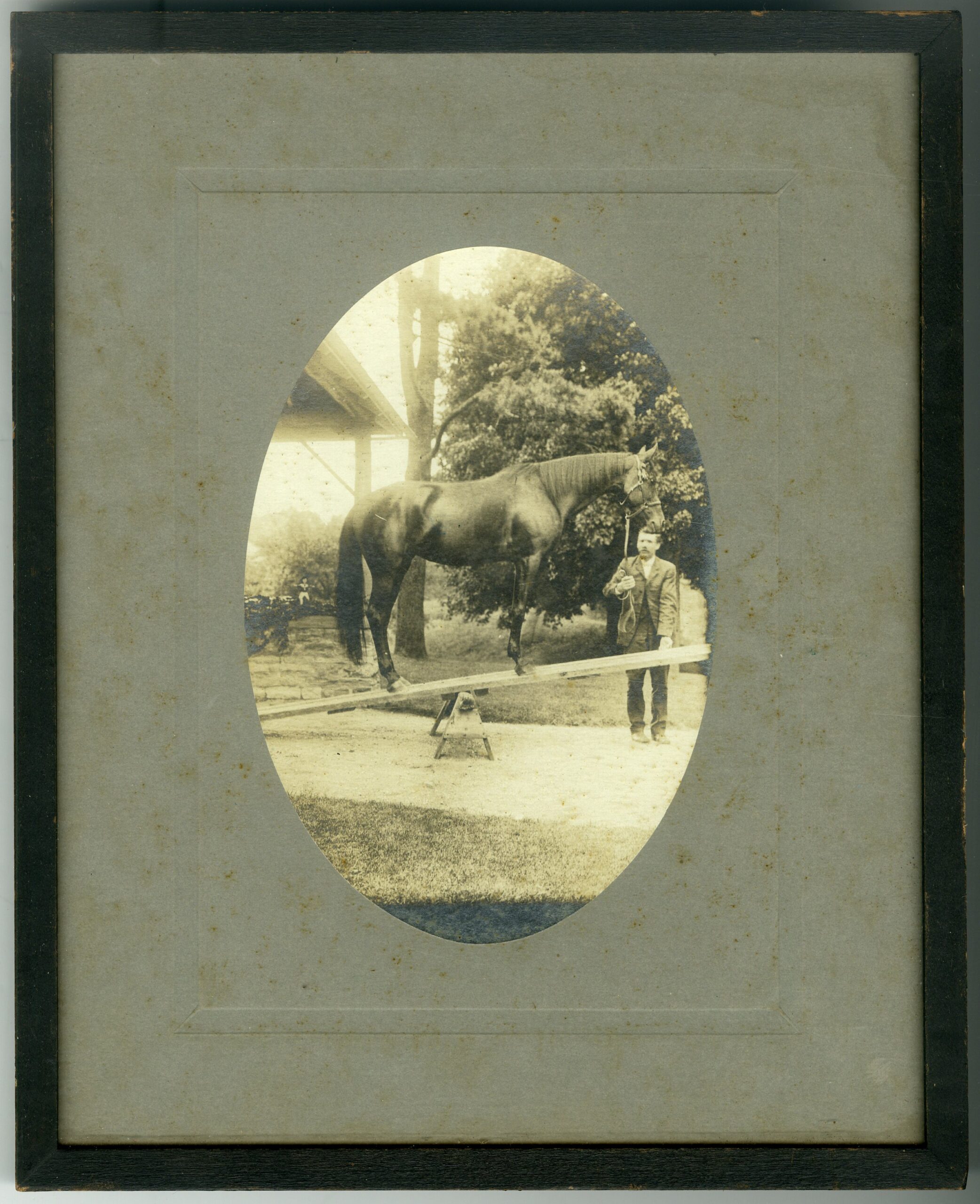
Odd233. Framed photograph of a trained horse on a fulcrum or see-saw. Image measures 6.25″ x 4.25″ and frame is 10.5″ x 8.5.” G. $50

Odd235. D.J. Wilkes, Baltimore, Md. Mr. & Mrs. A. Myers. CDV. VG. $250

Odd236. Chas. Eisenmann, NY. Madam Devere. CDV. G. $250

Per91. Atcheson & Tadman, Cape Town, South Africa. Unidentified youthful high-wire performer with feet in a basket. CDV. VG. $75
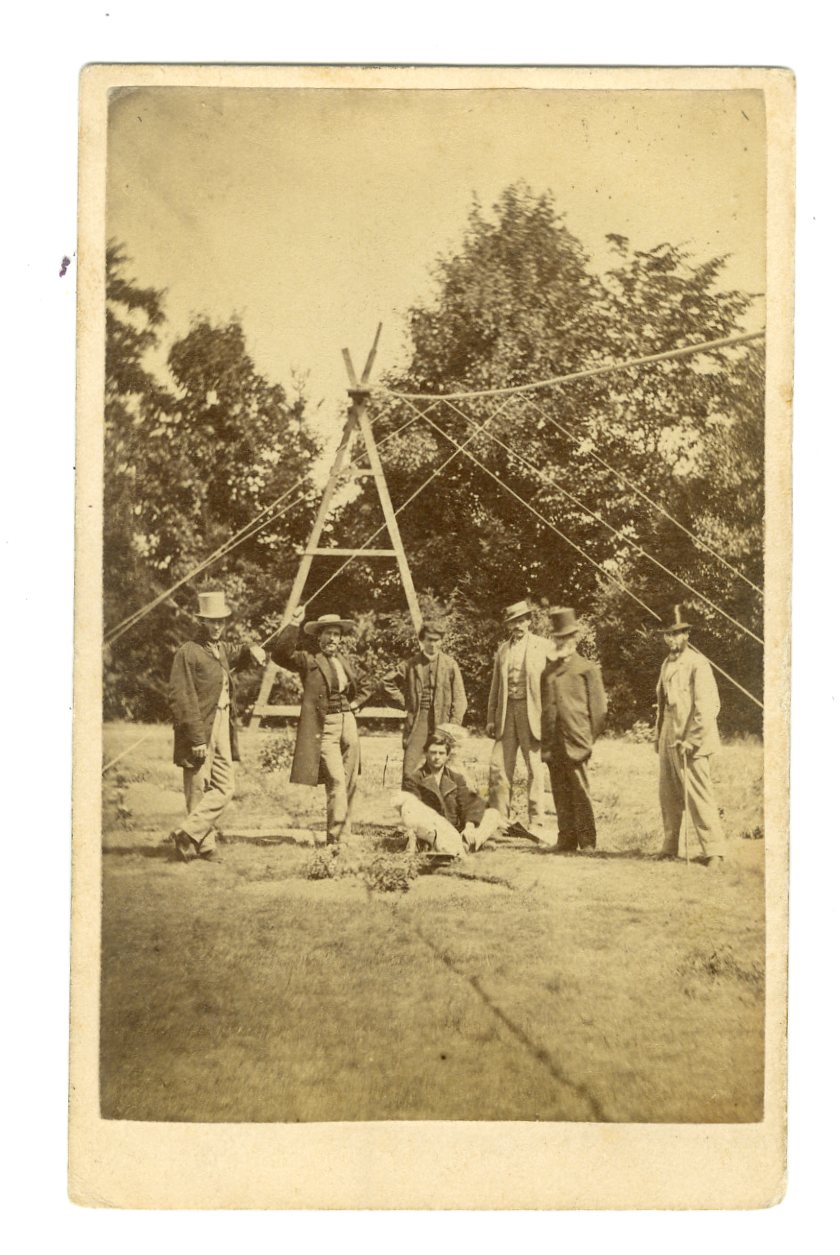
Per93. Unidentified set-up for a high-wire performance, men and dog posed. CDV. VG. $75
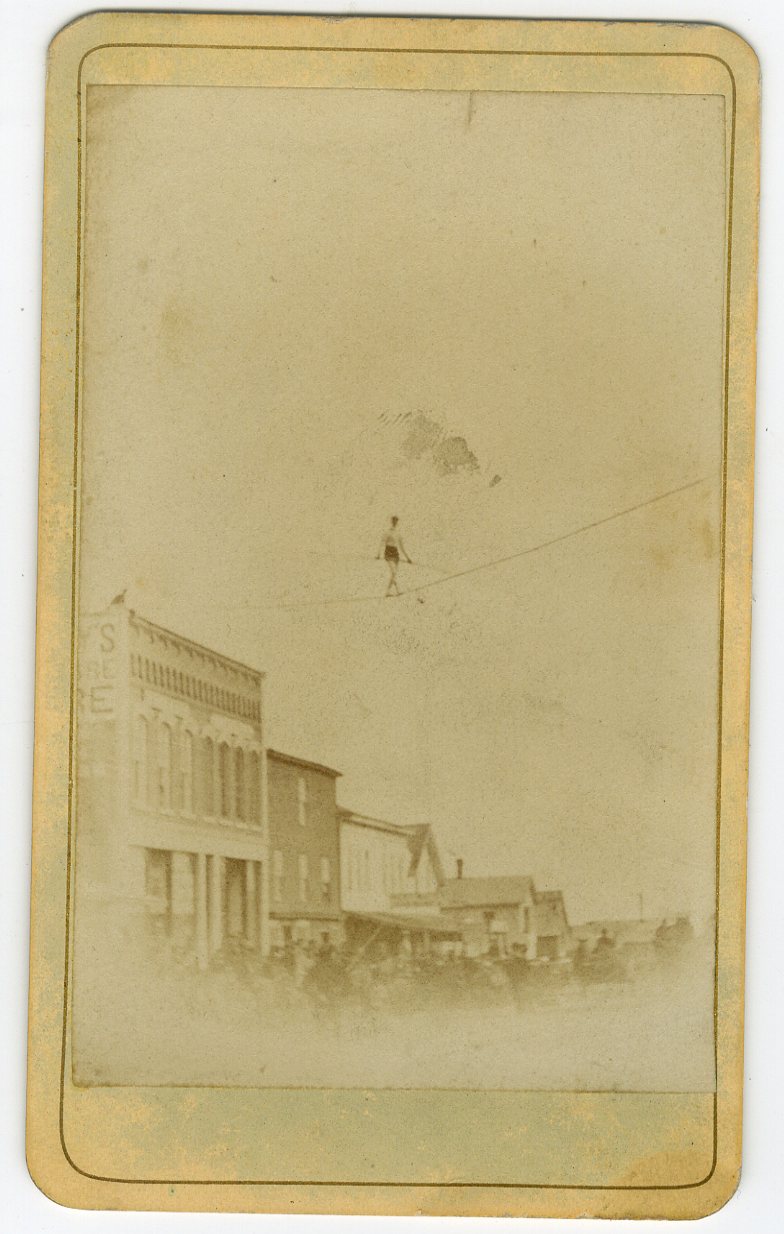
Per95. S.C. Mosher, Waterloo, Iowa. High-wire performer in action. G. $100
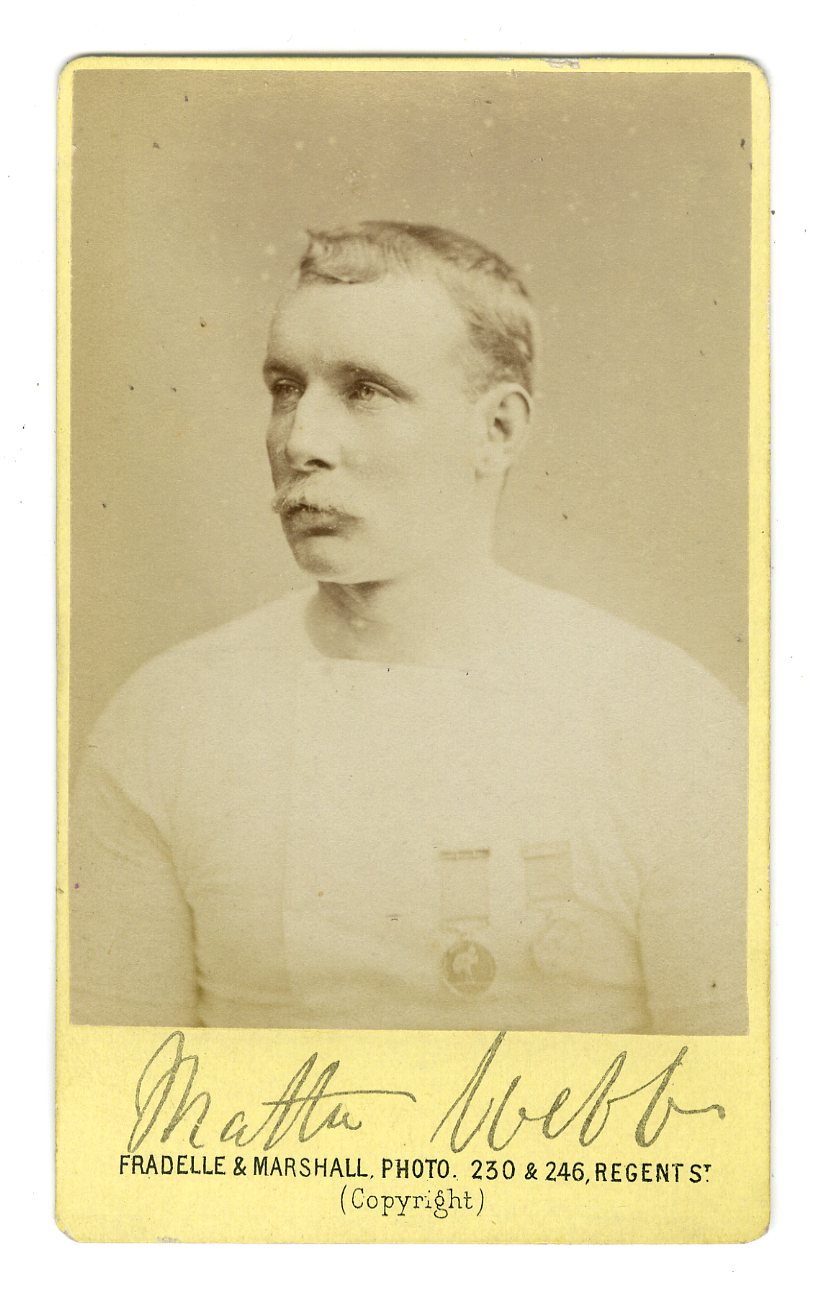
Per96. Fradelle & Marshall, London. Facsimile signature bottom recto of Matthew Webb, killed at Niagara. VG. $100

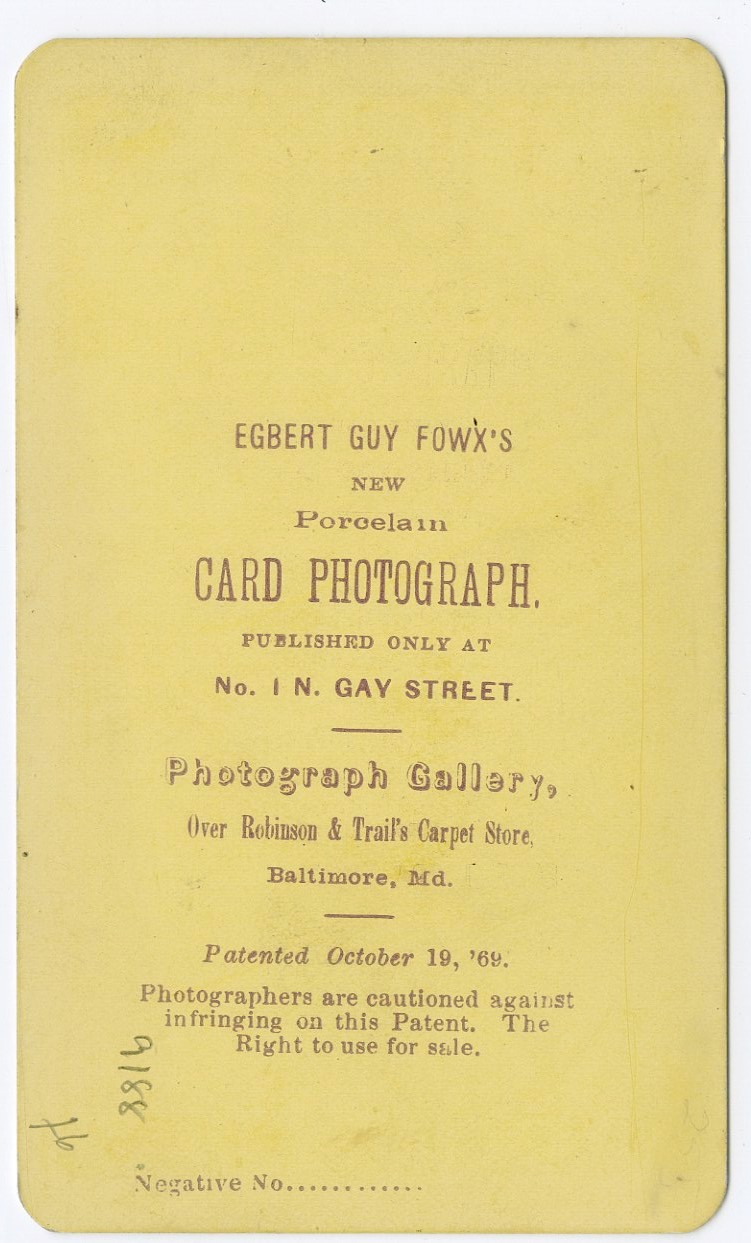
Per97. Egbert Guy Fowx’s New Porcelain Card Photograph, Baltimore, Md. Advertising CDV for George R. Edeson, Comedian & Pantomimist. This is no doubt a case where the photographer is much more famous than the subject of the CDV. Fowx was born in Kentucky in 1821. and died 17 October 1889. He is buried in Jersey City at Harsimus Cemetery. At the start of the Civil War, Fowx was one of Mathew Brady’s photo-documentarians. By 1863, he was working for Alexander Gardner. In February 1863, Fowx taught Captain Andrew J. Russell the ins and outs of the wet-plate collodion process, purportedly for the fee of $300. Sometime in late 1864, Fowx set up a portraiture studio at City Point and also worked for Mathew Brady on commission. He was one of the first photographers, along with Andrew Russell and Thomas Roche, to document the ruins of Richmond at the end of the war. After the war, he operated his own photography studio in Baltimore, Maryland, where this carte was made. VG. $150
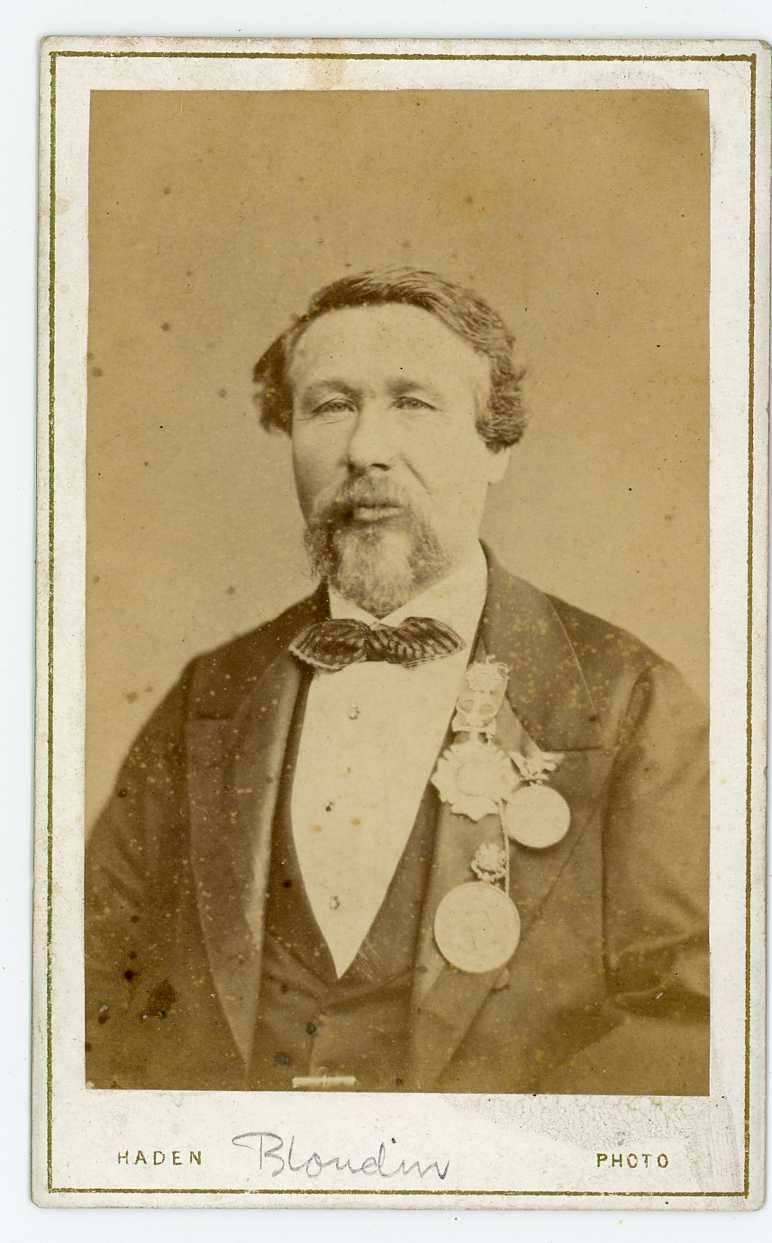
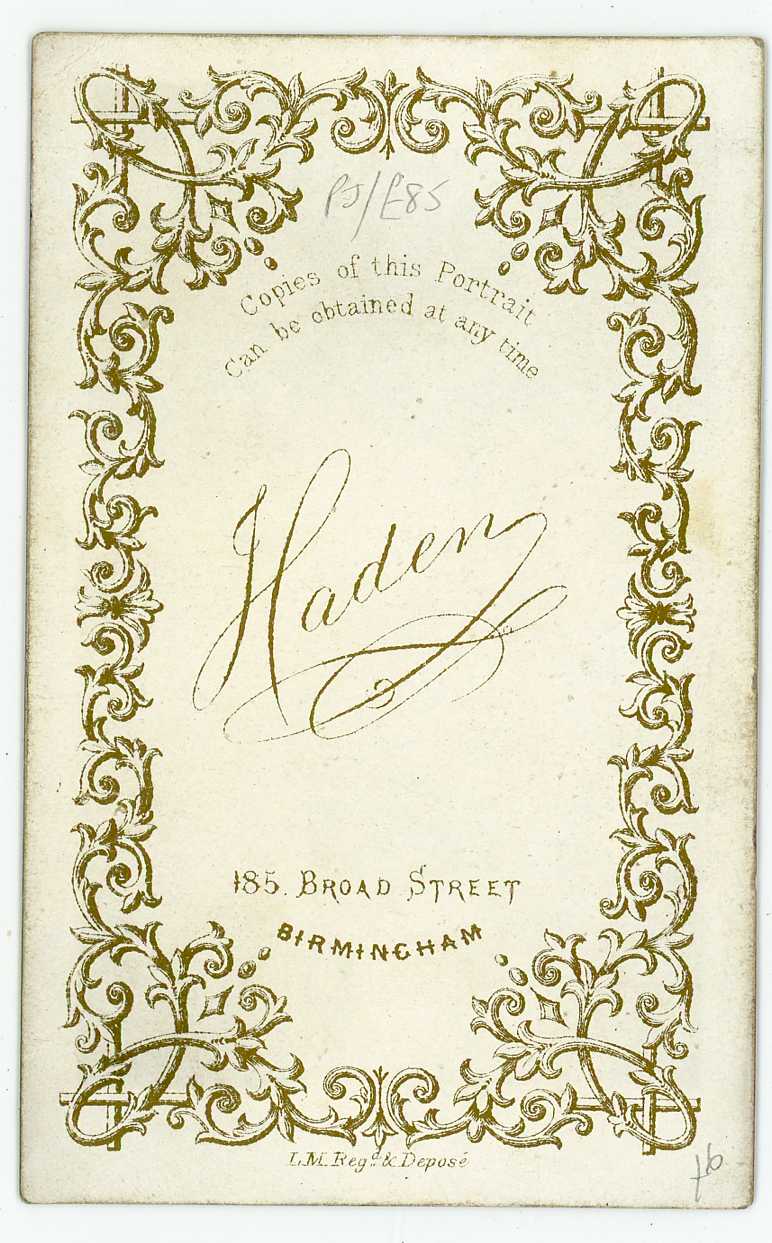
Per101. Haden, Birmingham. Charles Blondin, aerialist. Born Jean Francois Gravelet. CDV. VG. $125


30029-6400. The London Stereoscopic & Photographic Company. Cabinet Card of magician and inventor J.N. Maskelyne and his famous automaton Zoe. G. $1200


Odd246. Eisenmann, NY. Millie-Christine. Cabinet Card. G. $425
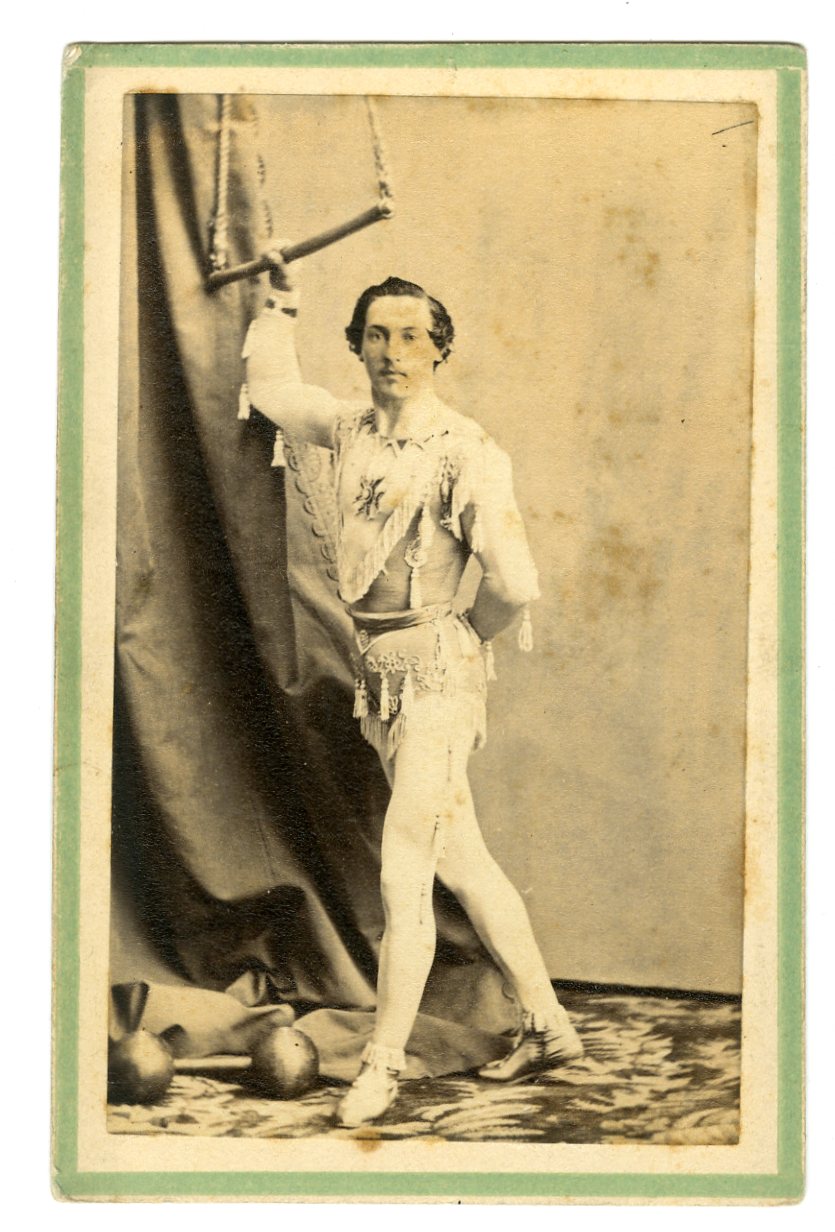

Per116. Charles D. Fredricks & Co., NY. William Hanlon (1842-1923).
Hanlon Brothers, acrobatic troupe and theatrical producers in the mid-19th and early 20th centuries who greatly influenced modern popular entertainment. All six Hanlon Brothers were born in Manchester, England. Five were biological siblings—Thomas (1833–68), George (1840–1926), William (1842–1923), Alfred (1844–86), and Edward (1846–1931)—and one, Frederick (1848–86), was adopted by the family in childhood after having been apprenticed to Thomas Hanlon, Sr., the brothers’ father, for theatrical training. Together they evolved a unique theatrical style that combined comedy, acrobatics, and illusions in an innovative and spectacular way.
The Hanlons’ parents were struggling actors in the northern English provinces. Thomas Hanlon, Sr., had at one time trained for the clergy but abandoned that pursuit to become an actor. He moved to Wales, where he married Ellen Hughes, an actress. Upon returning to England, the couple settled in Manchester, where Thomas took work as a theatre manager. They had eight children, the majority of whom followed their parents into the theatrical profession. Thomas Hanlon, Jr., was the first to take the stage, beginning his career at age four. He eventually became the foremost practitioner of aerial arts of his time, performing acts he called l’échelle perileuse (“the dangerous ladder”) and “the leap for life.” Meanwhile, George, William, and Alfred were, at young ages, apprenticed to the gymnast John Lees. The three became his wards and added his last name to theirs. After the six brothers reunited as an act, they used the name Hanlon-Lees until 1882. By the time of John Lees’s death in 1856, the Hanlon-Lees had completed three world tours and received universal praise in Europe, Asia, Africa, Australia, and North and South America.
During their early careers the brothers frequently worked apart from each other, usually with George, William, and Alfred as one act and Thomas, Edward, and Frederick as the other. By the early 1860s the Hanlons had become world-renowned for their daring gymnastic and aerial feats. Following French acrobat Jules Léotard’s introduction of the trapeze, the Hanlons took the device to North America. They were the era’s leading trapeze performers, perfecting throws, catches, and leaps and—in the routine they called “Zampillaerostation,” their most stunning act—swinging from three trapezes stretched across the auditorium, above the audience’s heads. The act, coupled with their carpet acrobatics (routines performed on the stage floor, such as balancing, human ladders, and somersaults) and gymnastic routines, amazed American audiences through the 1860s. The Hanlons also introduced the velocipede to American audiences.
In 1865 the eldest brother, Thomas, suffered a serious accident while performing when he plummeted to the stage from a height and pierced his skull on a footlight. Although he survived, he became mentally unstable. By 1868 he was suicidal and was hospitalized; that same year, while in custody, he killed himself. Out of the tragedy came one of the Hanlons’ most significant innovations: the aerial safety net.
By that time the Hanlons had begun to move away from their signature risky acts, and in 1870 they left the United States for Paris. Performing primarily at the Folies-Bergère music hall through 1879 to great success, the Hanlons won an audience that included some of Paris’s most distinguished luminaries, among them the writer Émile Zola. They developed and performed sophisticated pantomimes—evening-long loosely plotted hodgepodges made up of broad physical comedy, dance, spectacular settings, stage magic, and comic songs—that displayed their physical acumen and employed comedy, violence, and macabre and eccentric visions.
The Hanlons were assured of lasting fame with the 1879 opening of their production Le Voyage en Suisse at Paris’s Théâtre des Variétés. The show played for 400 performances, including a tour of Brussels, London, and the British provinces. In 1881 the Hanlons toured with it in New York and across North America. Written in three acts, Le Voyage en Suisse was their first full-length pantomime. The plot was a mere frame on which to hang the Hanlons’ signature comic set pieces and stage machinery. The production follows the antics of a young lover whose fiancée is suddenly snatched away to Switzerland by a lecherous older man. The five Hanlons played comic servants determined to keep the older man from the young woman’s bedroom. Le Voyage en Suisse featured rough-and-tumble skirmishes, demolished train cars, and wrecked hotel furnishings as backdrops for the troupe’s acrobatics. Among the work’s signature scenic tricks were a collapsing stagecoach and a full-size train that exploded. Seemingly impossible bits of physical comedy were included too—tumbles, fistfights, and the crash of a man through two floors that ended with his landing unscathed on a banquet table—all stunts learned in their early days as gymnasts. The company even found time to juggle the entire contents of a sumptuous feast—knives, forks, plates, crystal, and fowl. One very popular skit was the “drunken act,” in which two of the servants stole a Frenchman’s bottle of liquor and proceeded to imbibe the contents, with comically violent results.
The success of Le Voyage en Suisse allowed the five Hanlon Brothers to settle permanently in the United States, in the seaside town of Cohasset, Massachusetts. There the surviving Hanlons—George, William, and Edward—worked on their final productions, Fantasma (1884) and Superba (1890). Both pantomimes grafted their signature acrobatic slapstick onto fairy-tale plots with spectacular tricks and transformations. Until 1912 the Hanlons sent an entirely reworked version of each show on the road each year, featuring all-new machinery and technical gags. In 1914 they filmed Fantasma for Thomas Edison’s motion-picture company, but nearly all copies of the film were destroyed in a December 1914 fire at Edison’s West Orange, New Jersey, laboratory complex. Through 1915 George continued to perform in vaudeville with his sons.
The influence of the Hanlons cannot be overestimated. Their legacy can be felt across the 20th century’s most significant popular entertainments—in vaudeville, musical comedy, circus, and film. The next generation of sons continued the family’s fame, touring in a highly regarded vaudeville act that lifted significant portions from the pantomime shows of their fathers, first produced decades prior. George Hanlon, Jr., teamed with Broadway performer Ferry Corwey to create a number of highly regarded sketches, including one in which a chorus girl sang “I’m Forever Blowing Bubbles” while encased in bubbles. Hanlon sons clowned with the Ringling Brothers and Barnum & Bailey Circus through the 1950s. Perhaps most significantly, early film luminaries including Georges Méliès, Buster Keaton, the Marx Brothers, and even the Three Stooges borrowed significant portions of their work from the Hanlon Brothers. Later performers, including Jerry Lewis, Jim Carrey, Roberto Benigni, the “new vaudevillian troupe” the Flying Karamazov Brothers, and actor and clown Bill Irwin, continued the Hanlons’ legacy. CDV. VG. $300
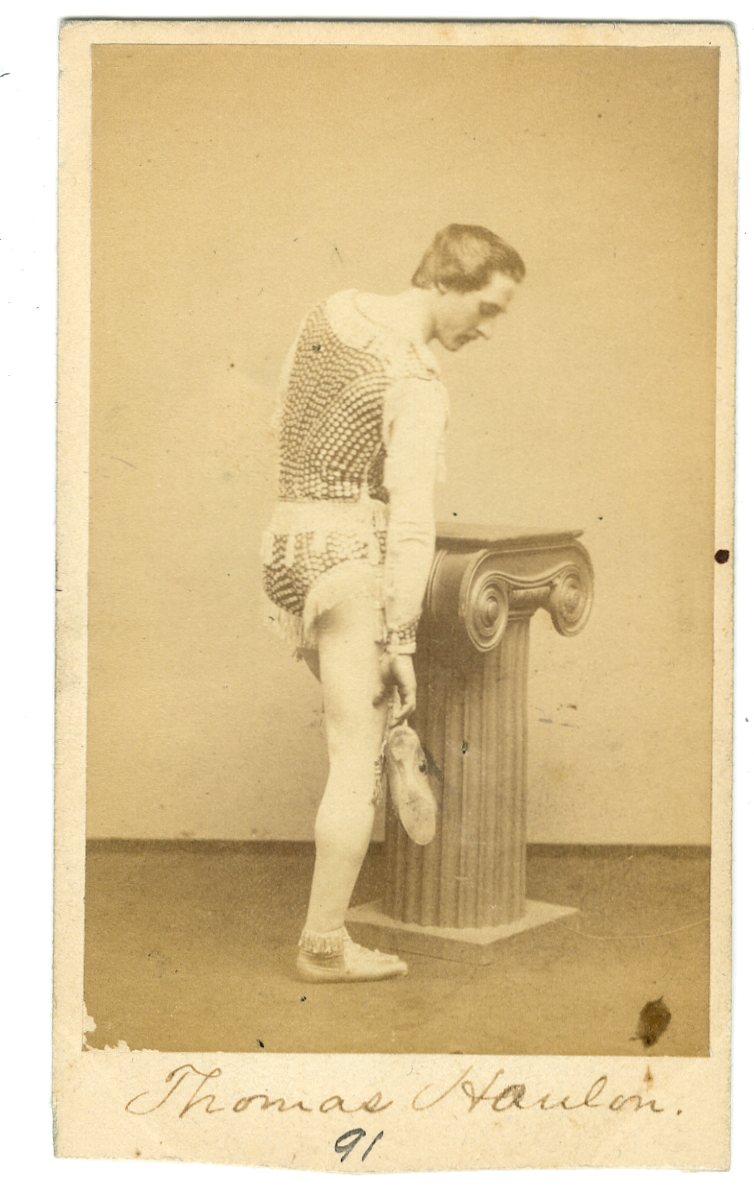
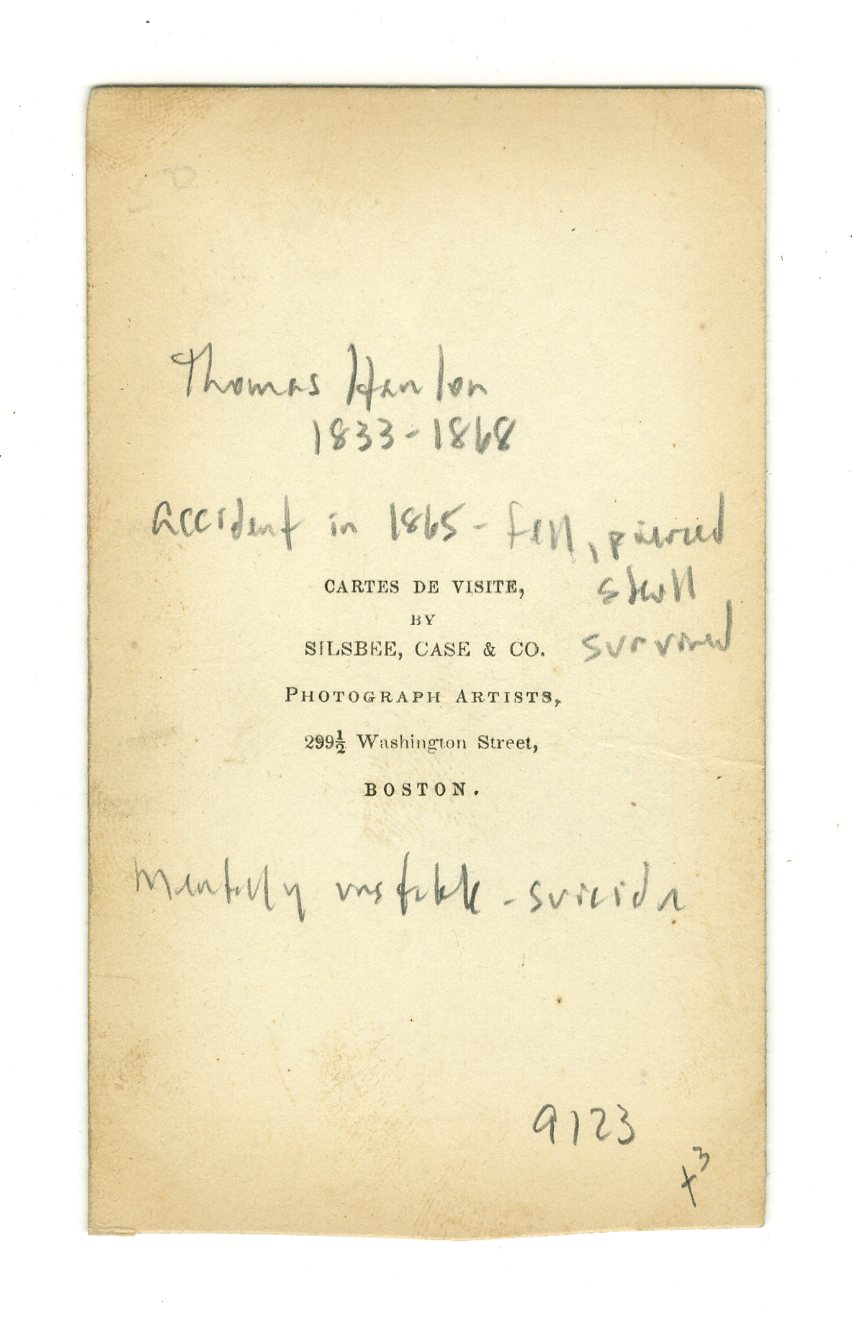
Per117. Silsbee, Case & Co., Boston. Thomas Hanlon (1833-1868). Suffered a fall from high in a performance in 1865, pierced his skull on a footlight. Survived but became mentally unstable, was hospitalized but committed suicide. See text in Per116 for the story of the Hanlons. CDV. Trimmed at bottom. VG. $275
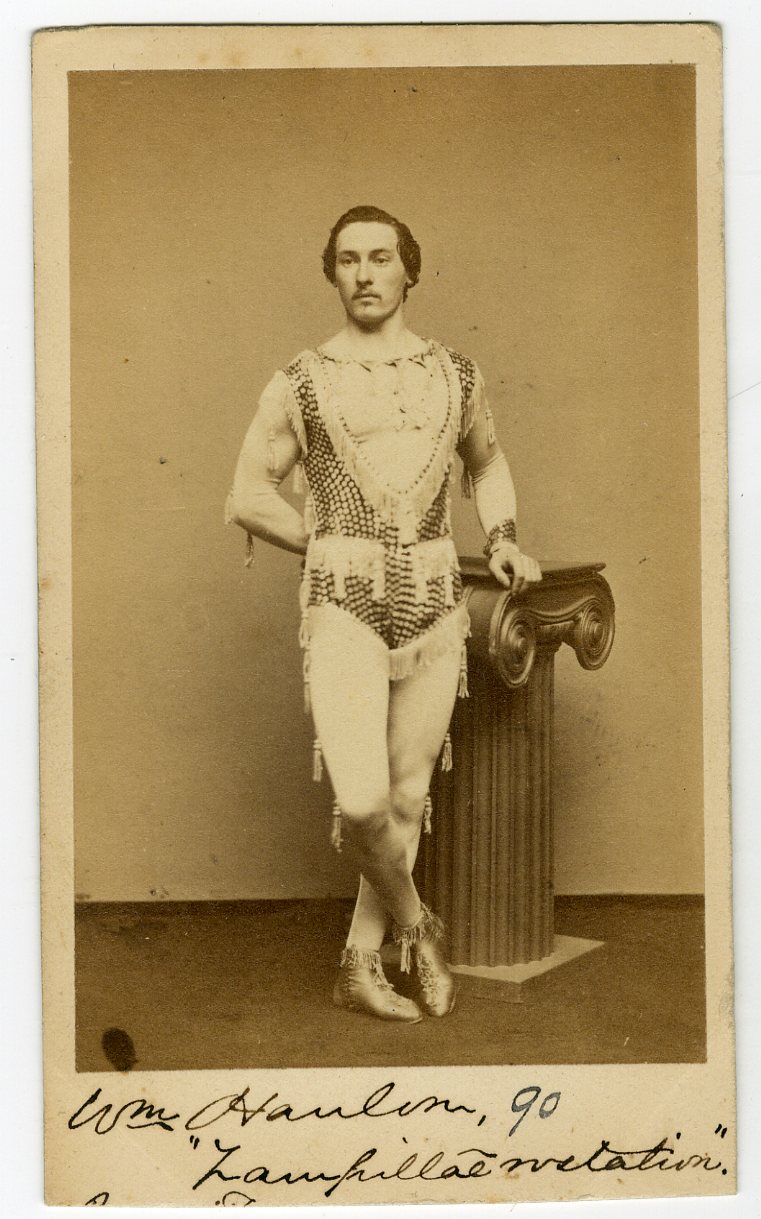
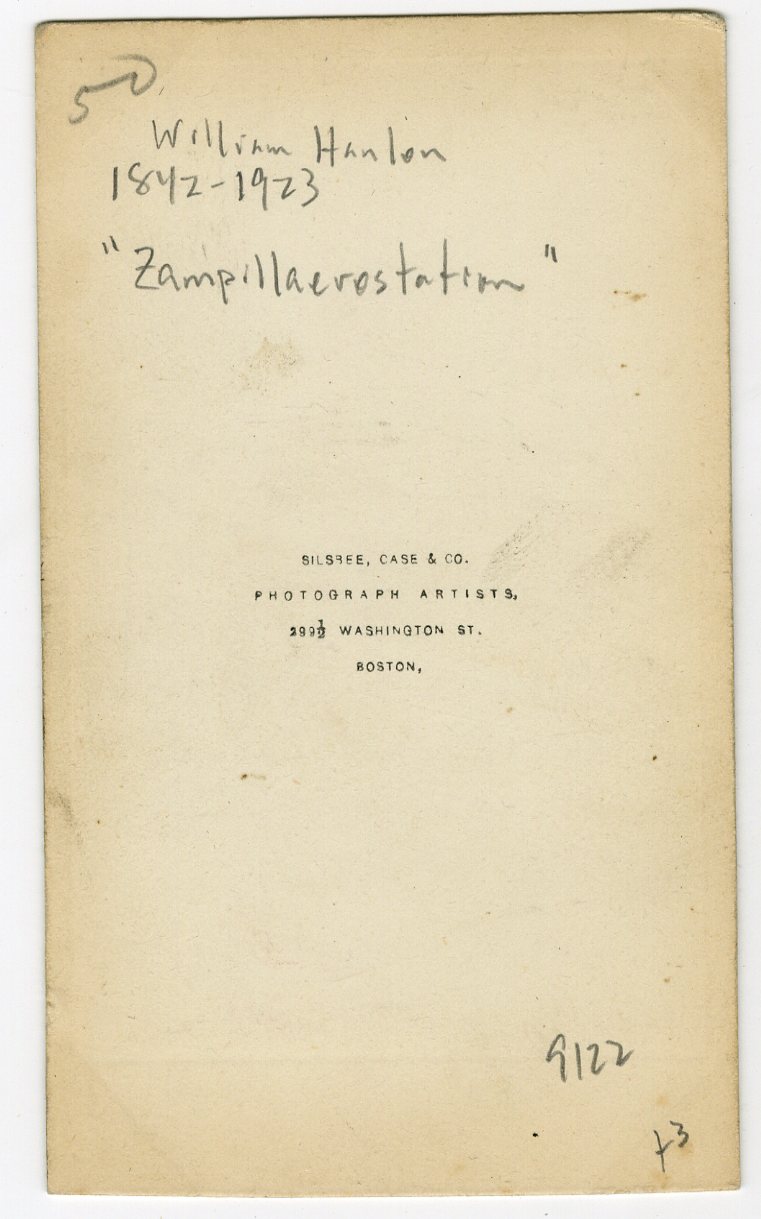
Per118. Silsbee, Case & Co., B0ston. William Hanlon (1842-1923). See the text for Per116 above for the story of the Hanlons. CDV. VG. $300


Per119. Written on verso “Saw Leotard and bought this at the Alhambra July 1st, 1862.” CDV. VG. $250
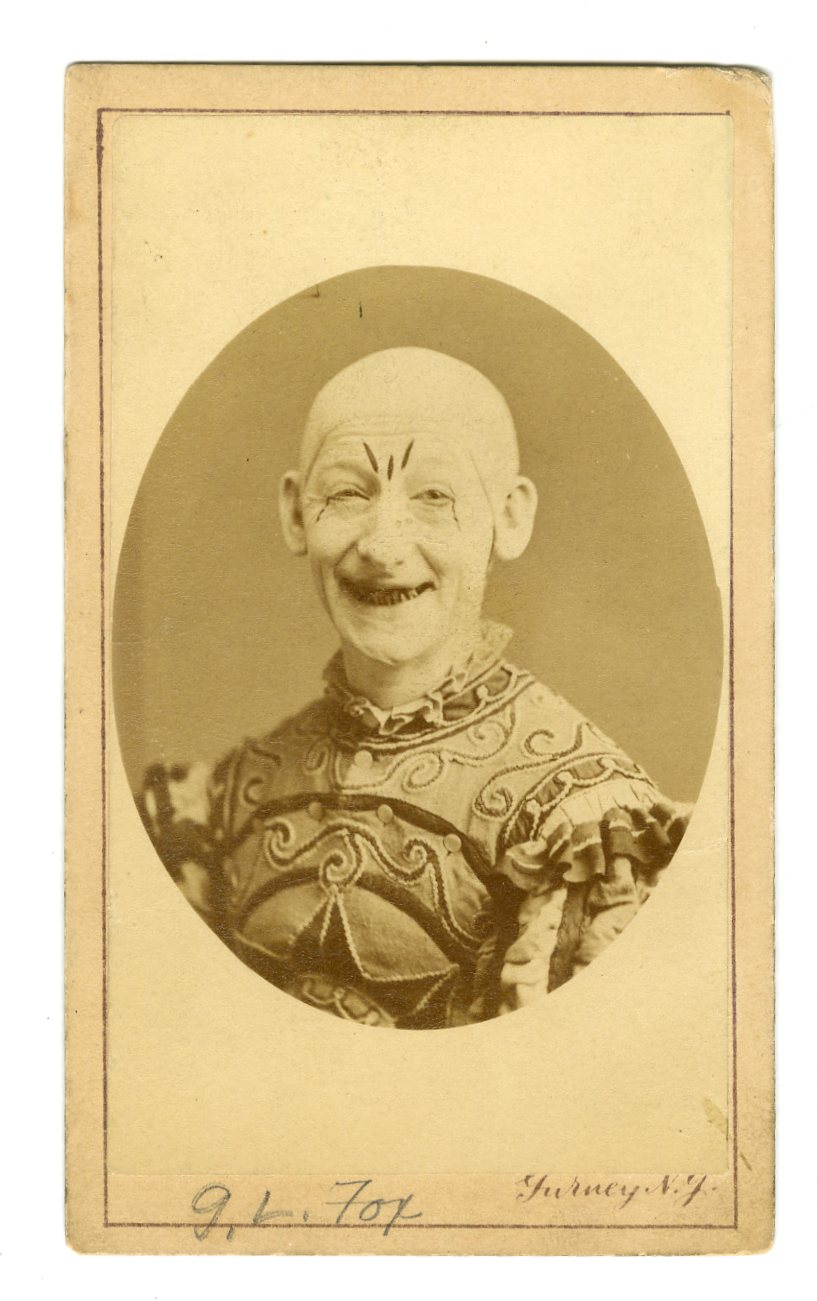
Per120. CDV by Gurney, NY of George Washington Lafayette Fox (July 3, 1825 – October 24, 1877). In the Civil War, Fox enlisted as a lieutenant in the Eighth New York Infantry. He rose to the rank of major and saw action at the First Battle of Bull Run before mustering out in August 1861.
Here is the rest of his story:
George Washington Lafayette Fox (July 3, 1825 – October 24, 1877) was an American actor and dancer who became known for his pantomime Clown roles, and who based the characterizations for these roles on his inspiration Joseph Grimaldi.
Fox was born George Washington Lafayette Fox, the first child of George Howe and Emily (née Watt) Fox of Cambridge, Massachusetts. His parents were stock players at Boston’s Tremont Street Theatre, where Laff (his childhood nickname) and his five siblings were often called upon to play juvenile roles. Fox made his debut at the Tremont Street Theatre at the age of five, though in later years his younger brothers, Charles and James, and his sister Caroline were considered the more talented. James and Caroline became popular in the Boston area as a child act and flourished for a number of years. Fox’s parents decided his future would be better served if he learned a trade and they enrolled him in an apprenticeship with a local merchant.
Fox’s brother James continued acting for several years, even while attending Harvard Law School and would later become a successful lawyer and four-term mayor of Cambridge. His sister Caroline married actor George C. Howard, a union that would leave an important mark on the history of American theater. In 1852 Howard commissioned his wife’s cousin George L. Aiken to write a dramatization of Harriet Beecher Stowe’s famous anti-slavery novel Uncle Tom’s Cabin. The original production at Peal’s Museum in Troy, New York spawned a sequel and then was merged into a six-act play that ran until the 1930s. The play had probably a greater impact than the novel by visually depicting the cruelties of slavery and was a boost to the abolitionist movement.
By the time Fox had reached the age of twenty his apprenticeship had failed, leaving him to return to the family business. He toured for a while with Howard and his sister as L. Fox, playing minor dramatic and comedic roles. He left their company in 1850 to try his hand as a low comedian at the Bowery’s National Theatre on Chatham Street. There he finally found his niche, becoming a popular headliner over the following seven years. For the remainder of his career Fox would play at venues that catered primarily to working-class audiences.
In 1853, Fox directed and performed in his cousin’s dramatization of Uncle Tom’s Cabin at the National, starring Fox as Phineas Fletcher; his brother Charles as Gumption Cute; brother-in-law George C. Howard as Augustine St. Clair; sister Caroline as Eva St. Clair; William J. Le Moyne as Deacon Perry; and Greene C. Germon as Uncle Tom.
Inspired by the French Commedia dell’arte artists, the Ravel Brothers, to undertake the British musical genre of pantomime, he created a distinct place for that kind of entertainment in New York City, first at the National Theatre and later at the New Bowery Theatre, of which he was for a time both lessee and manager in partnership with James R. Lingard. Fox continued to surround himself with an increasingly competent group of comedians and acrobats that included his brother Charles, who had become popular as an actor and a pantomime Clown performer. Though often overlooked by the theater critics of the day, Fox’s popularity in vaudeville houses at the time can be compared to that of Edwin Booth’s playing Hamlet, a role that Fox played in a much lighter vein.
When Fox returned from the war, he resumed playing pantomime roles to Lower East Side audiences. Fire forced him out of the New Bowery Theatre, one of many that would curse the building over the years. Poor business had caused a schism with Lingard that would later spill over into the court dockets. In 1866, Fox became stage manager at the Olympic Theatre on the East side of Broadway near Houston Street. There he played Bottom in A Midsummer Night’s Dream and, starting in 1868, his signature role as Clown in a pantomime version that he co-wrote of Humpty Dumpty, the first American pantomime to be performed in two acts, which some feel has never been equaled since.
Over the last decade of his life, Fox would encounter artistic success coupled with financial setbacks. As a manager he often ignored the bottom line when planning a new show and as a result several of his productions that were popular with the public saw little return. This problem was compounded by competition from younger artists who were performing in ever more spectacular productions each year and by an unscrupulous partner who made promises he could not honor.
Fox’s health began to fail in 1875 after an accident on stage that broke his nose and damaged an optic nerve. Erratic behavior over the next few months that caused some concern over his sanity was soon followed by a series of strokes that eventually led to his death, aged 52. At the time of his death he was under the care of his sister and brother-in-law at their residence in Cambridge. Fox’s daughter, Louisa A. Fox, later married Daniel Sully, a stage actor who was a circus performer in youth. VG. $150
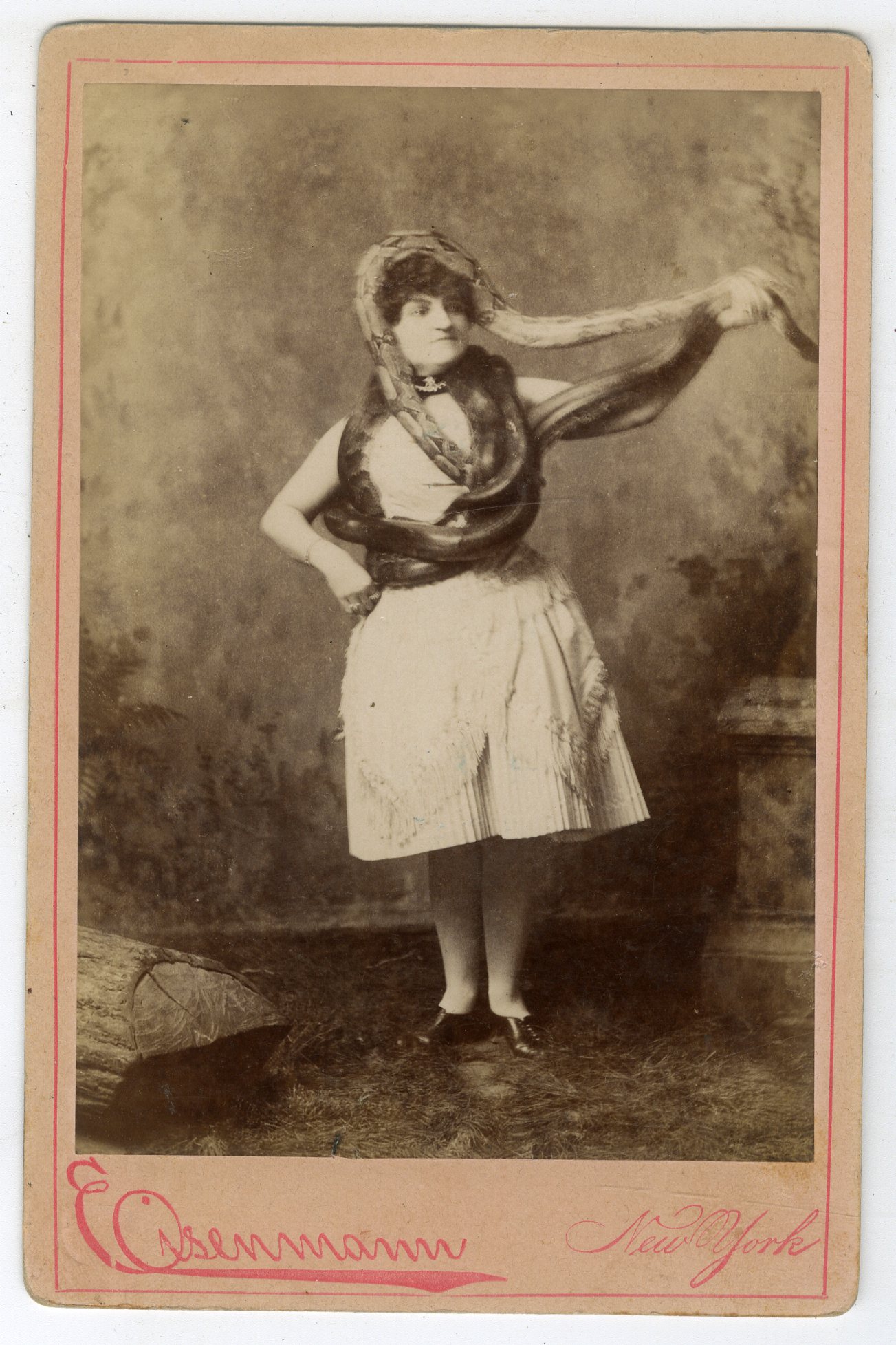
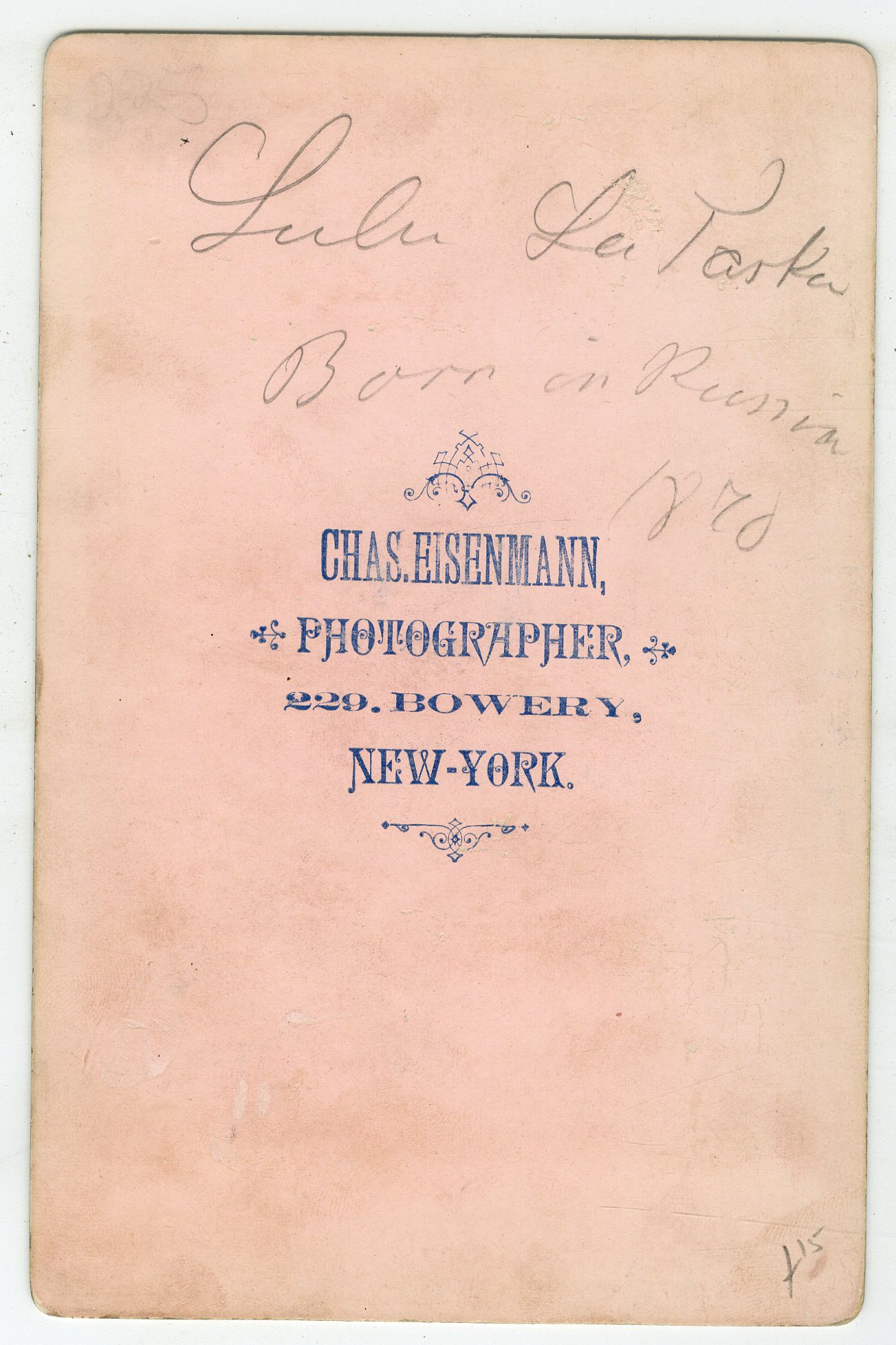
Odd250. Eisenmann, NY. Cabinet Card of Snake Lady Lulu La Paska, born in Russia, 1870. VG. $250
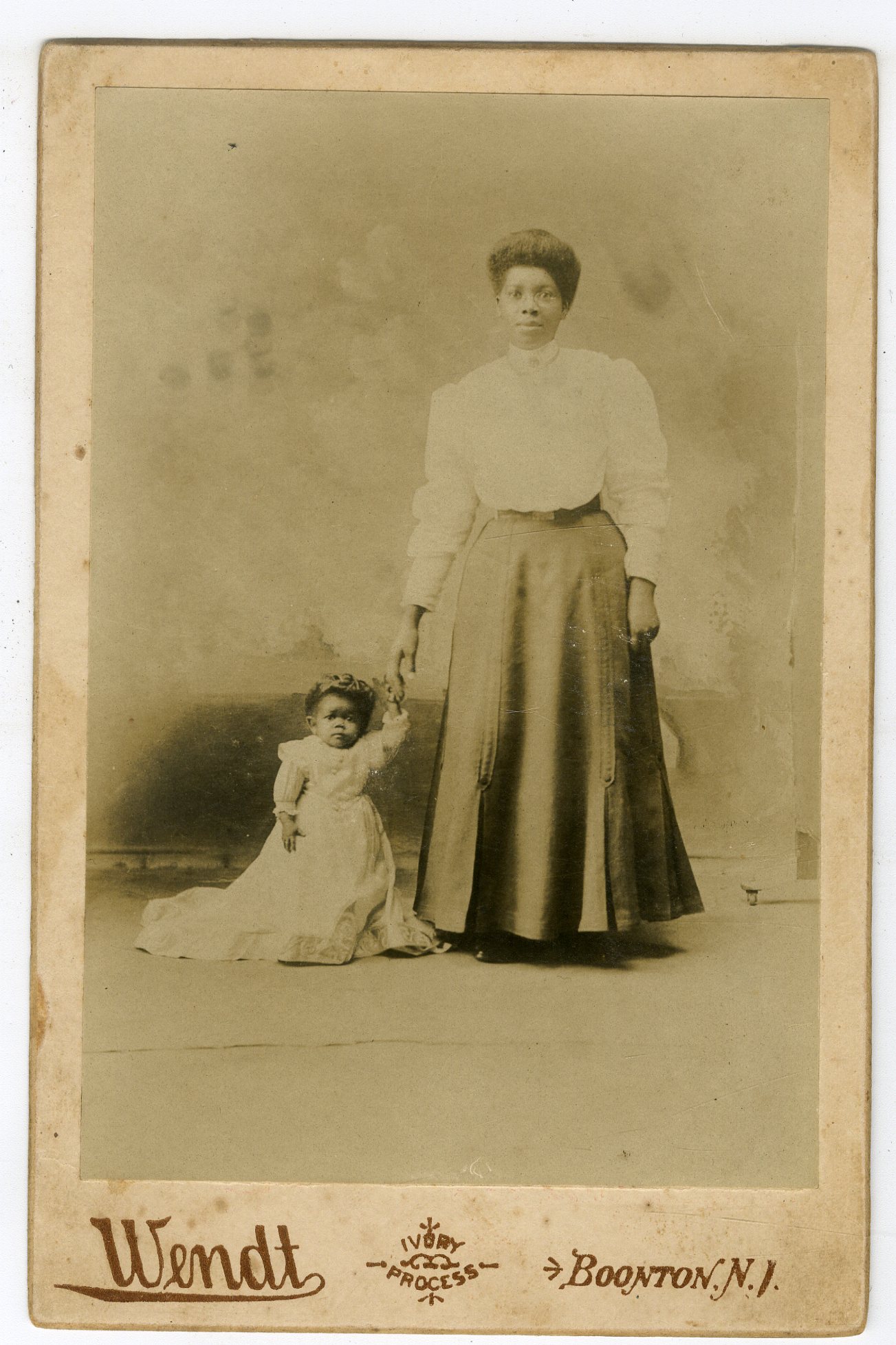
Odd251. Wendt, Boonton, N.J. Princess Wee Wee, age 21, Height 18 inches, weight 9 lbs. Her real name was Harriet Elizabeth Thompson, a native of Baltimore. She appeared at Dreamland in Coney Island. Cabinet Card. G. $250
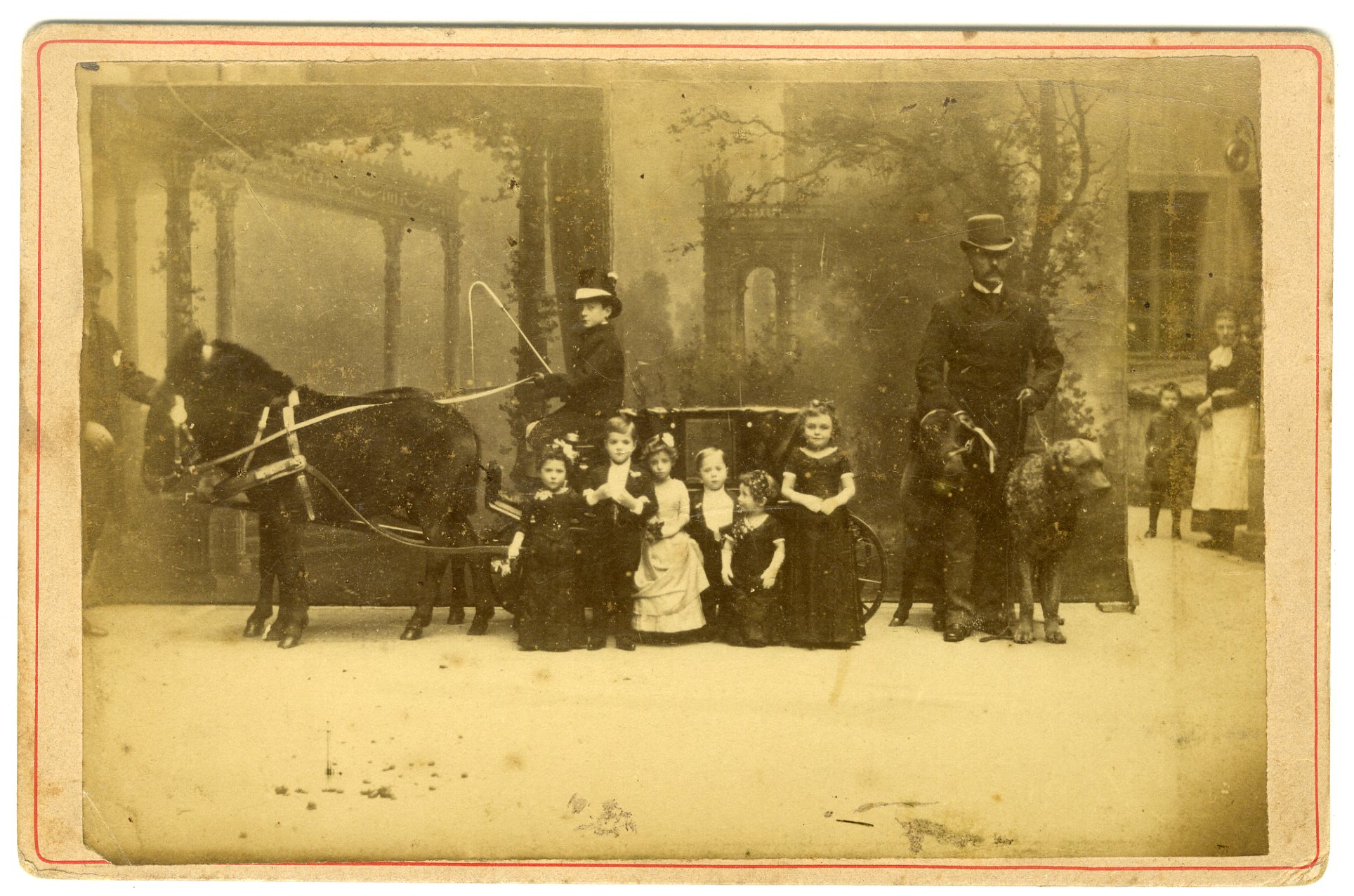
Odd253. E.A. van Blitz et fils, Utrecht. Cabinet card of a Lilliputian group before carriage, whether actually little people or children or a mix is unknown. Man at right holds two large dogs. VG. $50
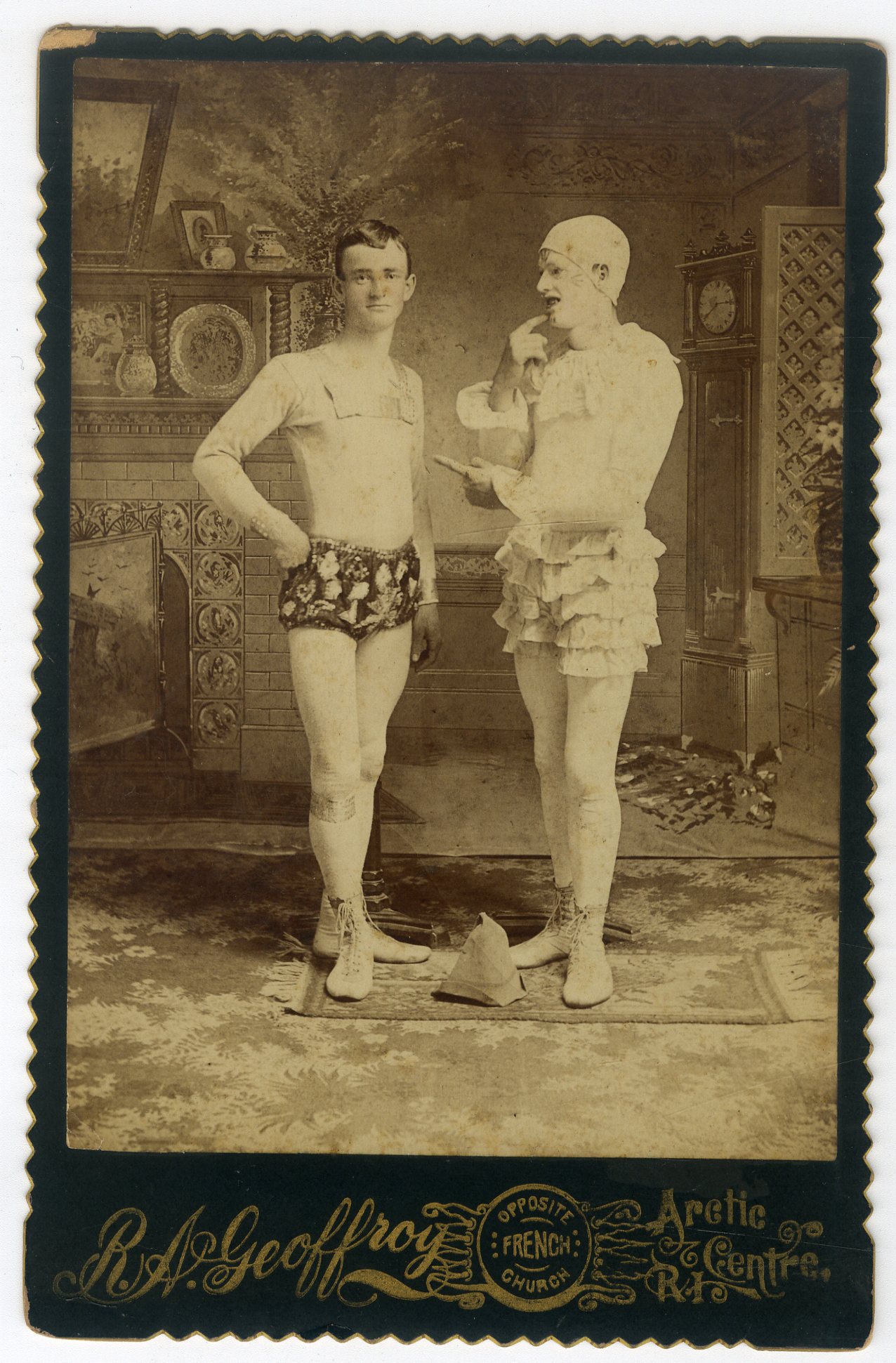
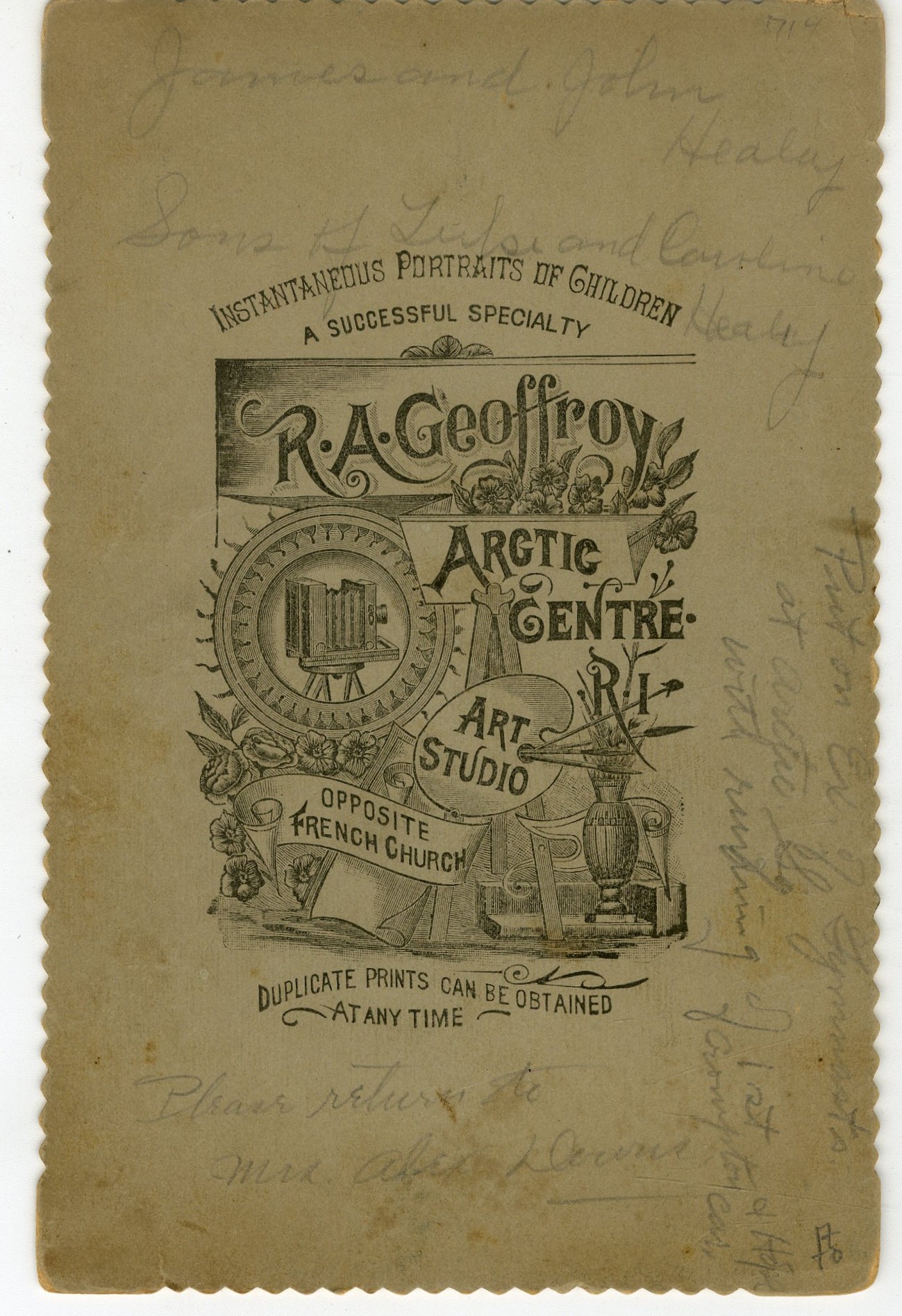
PER121. R.A. Geoffroy, Arctic Centre, RI. Written on verso: “James and John Healey, Sons of Lulse? and Caroline Healey. Put on Ex. of Gymnasts at Arctic Square with running of 1st & Hope Crompton Car.” I may have gotten a few words wrong here but it’s close to the notes on verso. Cabinet card. VG. $200
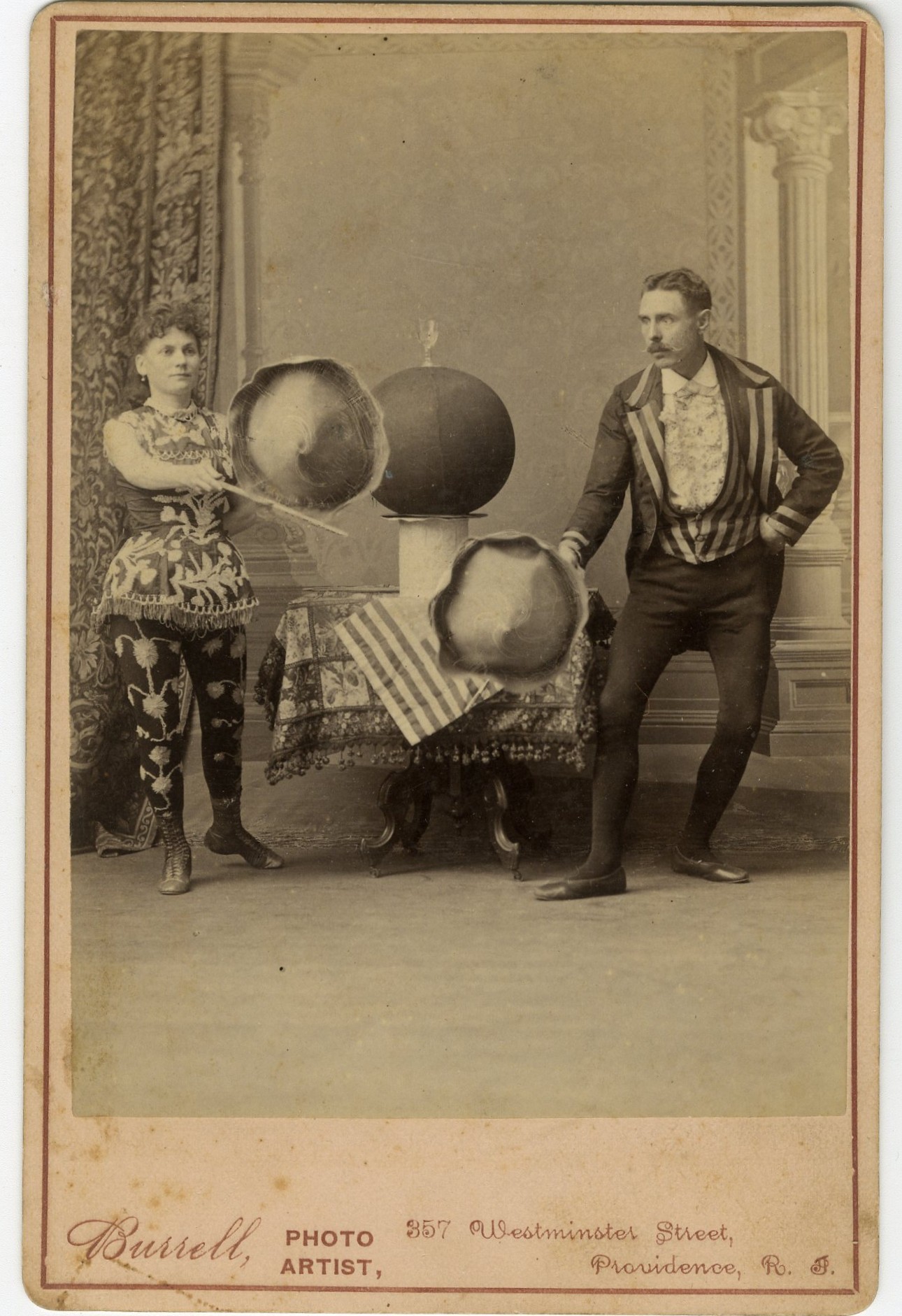
PER122. Burrell, Photo Artist, Providence, RI. Unidentified performers/magicians. VG. $225