The ship Re Galantuomo (Gentleman King) was originally launched in 1850 as the Monarca. When she was built, the Monarca was the largest and most powerful ship ever built in Italy. She was armed with 84 guns, which rated her as a second-class ship-of-the-line. She was, however, already becoming obsolete because she was solely sail-powered, and in 1858 she was converted to steam power. The conversion reduced her armament to 64 guns but was not very successful as her first propeller proved incapable to moving her at more than 4 knots. It was later replaced, and the ship’s speed under steam increased to 8 knots. The ship originally belonged to the Kingdom of the Two Sicilies which was under the control of the House of Bourbon whose origin was in the Kingdom of France. A branch of the Bourbons came to rule in Spain and descendants of that branch came to rule the Kingdom of the Two Sicilies. The Kingdom extended broadly across Southern Italy and existed from 1816 until Italian unification in 1861. In 1860, Garibaldi and his men toppled the Kingdom of the Two Sicilies and the Monarca passed over to the Navy of the Kingdom of Sardinia. The Kingdom of Sardinia was the legal predecessor state to the Kingdom of Italy. Founded on March 17, 1861, the Italian Royal Navy renamed the ship Re Galanuomo and was registered in service as a third-class, propeller-driven steamship. She was the largest warship flying the Italian flag.
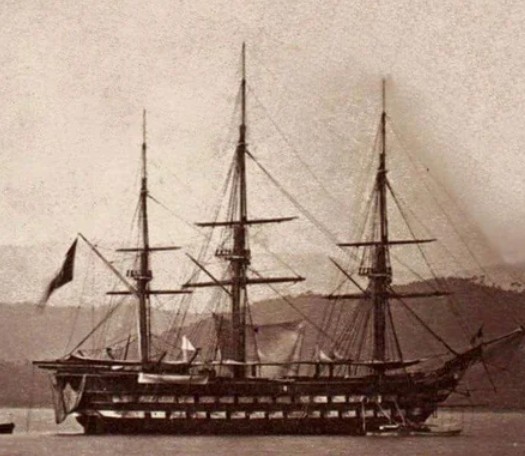
Re Galantuomo
The title Re Galantuomo was given to the ship to honor Victor Emmanuel II of Savoy (1820-1878), who reigned as King of Sardinia (1849-1861) and then as the first King of Italy (1861-1878). He was also known as the “Father of the Fatherland.” This nickname reflected his popularity and the respect he earned for his leading role in the Risorgimento (the Italian unification movement).
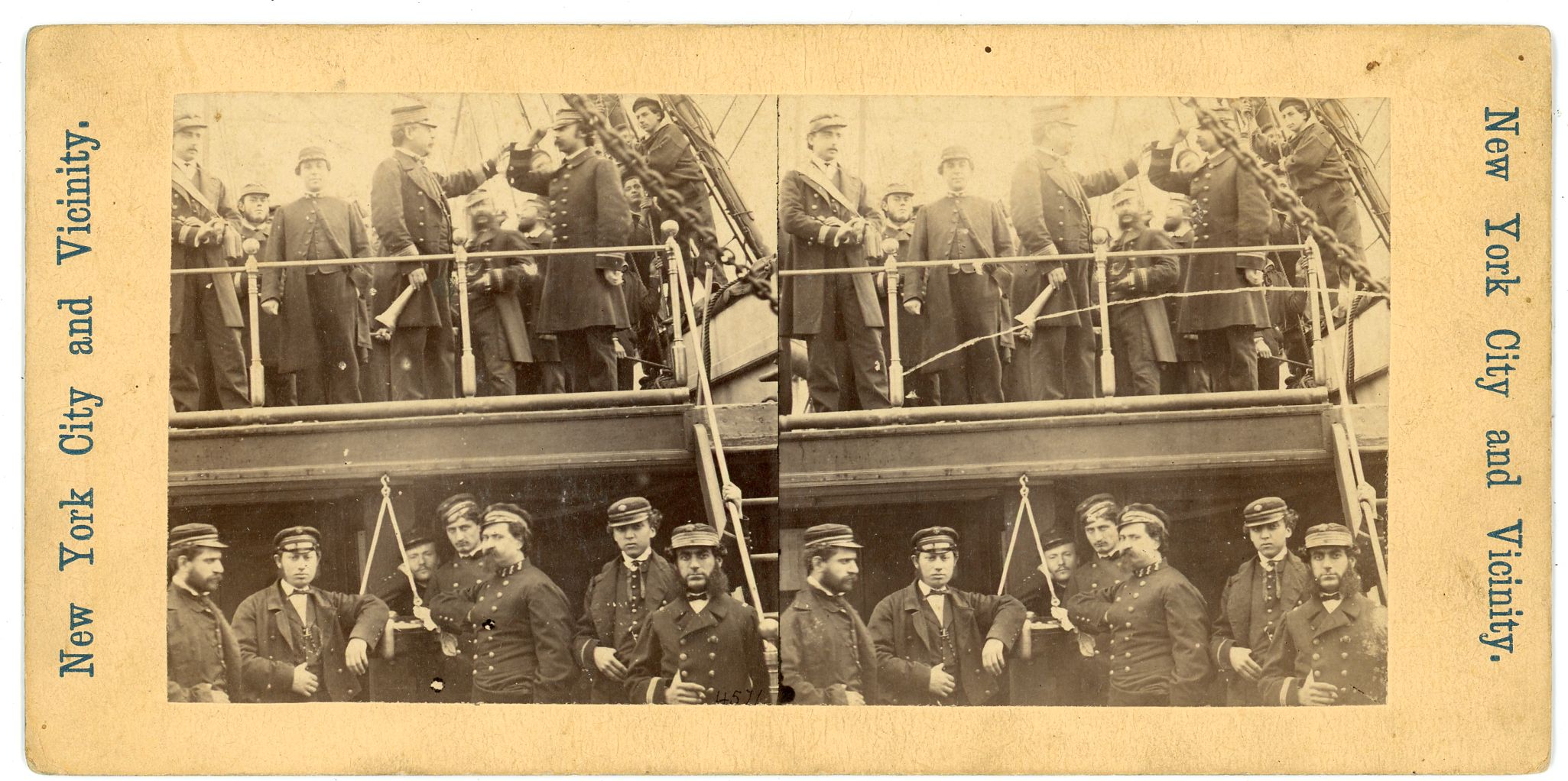
E&HT Anthony No. 4571. Group of Officers, on board of the Italian man-of-war Re Galantuomo, in NY Harbor, 1862 [sic], the Commandant, Comte Ulisse Tsolo, giving orders.
Bourbon troops, specifically those loyal to King Francis II of the Two Sicilies, held out in the fortress of Gaeta during the Italian unification process. The Re Galantuomo took part in the blockade and siege of Gaeta, participating in the naval bombardment of the fortress in February, 1861. When Gaeta surrendered on February 13, 11 men of Re Galantuomo were decorated with the Silver Medal for Military Valor, 7 more received the Bronze Medal.
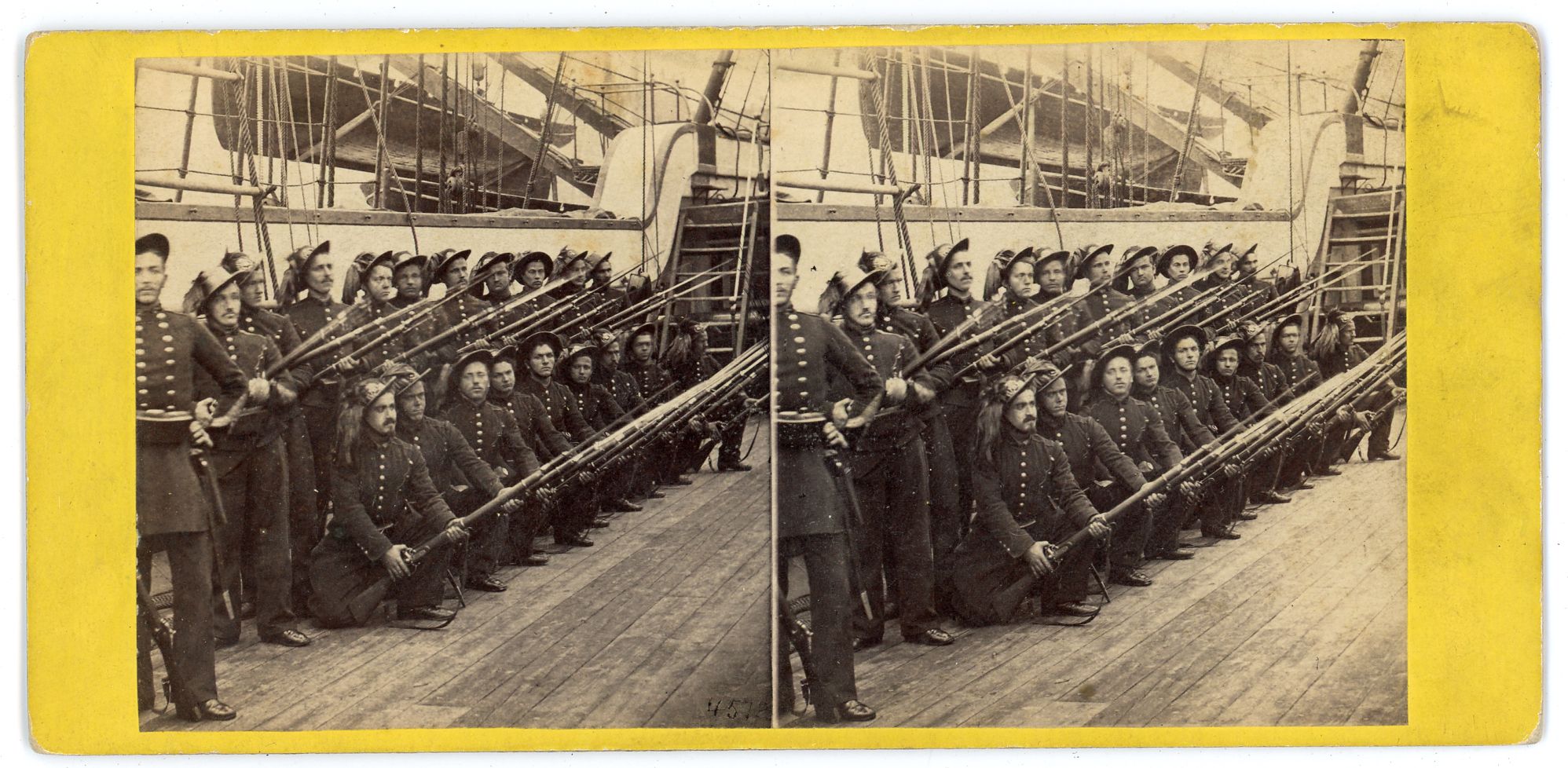
E&HT Anthony No. 4572. Group of Soldiers charging with bayonets, on board of the Italian man-of-war Re Galantuomo, in NY Harbor, 1862. [sic]
The Re Galantuomo first returned to Naples, then went to Messina, where the fortified citadel in the hands of the Bourbon troops still held out. The ship took part in the bombardment operations which led to the surrender of the fort on March 12, 1861. This was the end of the Bourbon dynasty’s control in Southern Italy and Sicily.
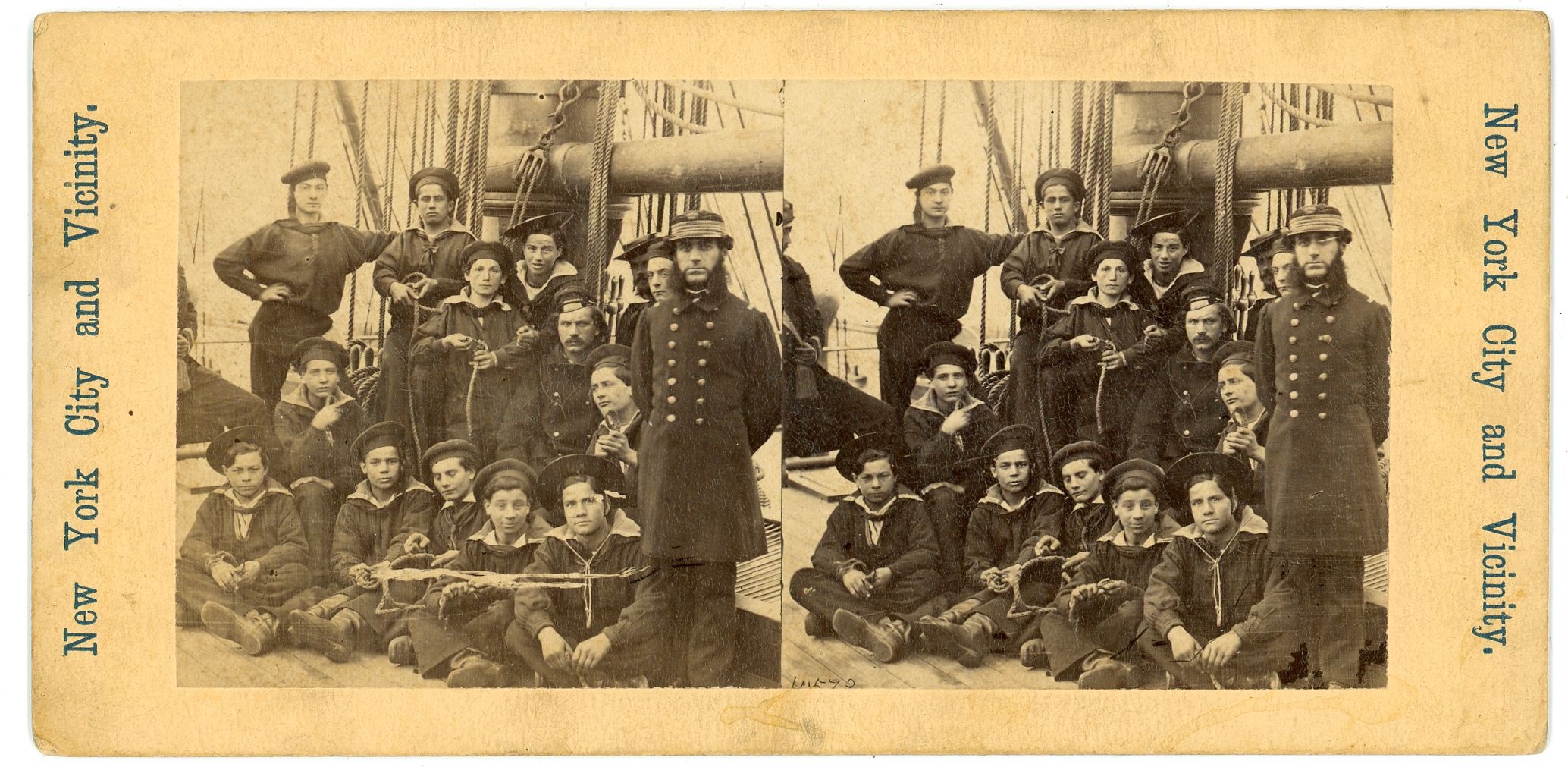
E&HT Anthony No. 4573. Group of Boys, on board the Italian man-of-war Re Galantuomo, in NY Harbor, 1862. [sic]
On September 5, 1863, Re Galantuomo, under the command of Captain Ulisse Isola, set sail for America, where she transported the sailors destined to be the crew of the ironclad steam frigate Re d’Italia which was being built at the Webb shipyards in New York. The ship arrived in NY harbor on November 5, 1863. The stereographic images made by E&HT Anthony, which illustrate this article, were taken sometime over the next few weeks and months while the ship remained in NY harbor. For some unknown reason, possibly a printer’s error, all of the Anthony labels incorrectly indicate that the visit of the Re Galantuomo occurred in 1862 rather than 1863. Two of the stereoviews illustrated in this article have revenue stamps on versos. The stamps indicate that the retail sale of these particular stereographs took place between Aug. 1, 1864 and July 31, 1866 when the revenue tax on photographs was in place.* This tax was applied in order to help finance the Union effort in the Civil War.
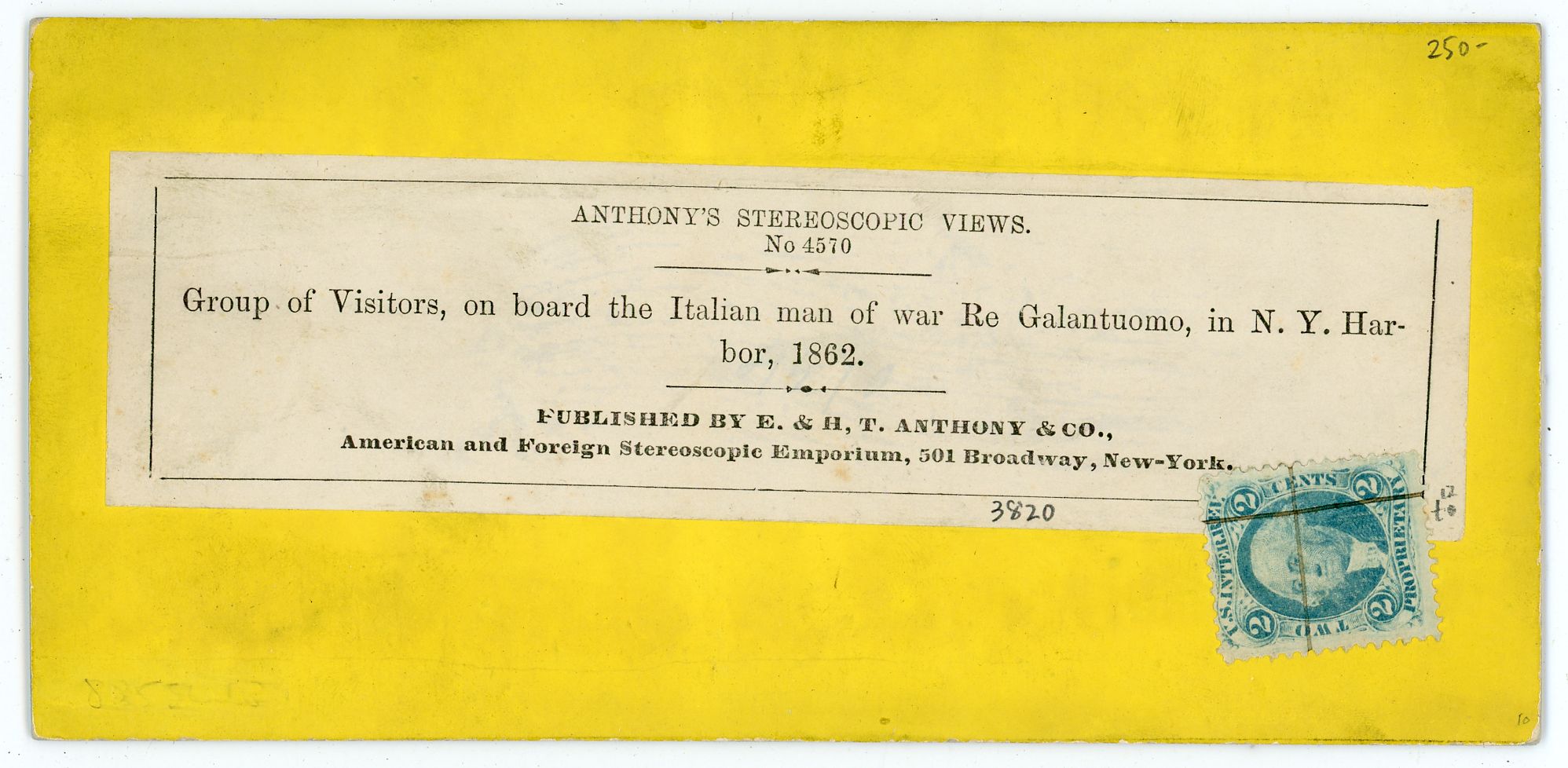
Back label of Anthony’s No. 4570, showing the erroneous date (it was in fact 1863) and the 2-cent tax stamp. This error is present on all of the views of this event issued by Anthony.
While the primary reason for the journey of the Re Galantuomo to NY was to bring sailors to serve as crew for the Re d’Italia on its trip back to Italy, it was also clearly an act of good will and support for the Union during the American Civil War. After all, the US officially recognized the Kingdom of Italy on April 11, 1861, early in its formation. Entertaining guests on board the ship and taking part in social activities with members of high society, politicians, and American military counterparts was good for the public relations of the new nation-state.
On October 21, 1863, the following appeared in the NY Times:
The Re de Italia and Re Don Luizidi Portogallo.
Italian war vessels, which were recently launched at W.H. WEBB’s ship-yard, foot of Sixth-street, East River, are now nearly ready for sea. They were ordered a few months since for the Italian Government by the Royal Italian Marine Department. It is understood the Re de Italia will have steam on her engines sometime this week. Both vessels are bark-rigged, 286 feet in length, 55 beam, 33 feet depth of hold, and register about 5,000 tons. They are to be clad with 4 1/2-inch iron plates, and will in no wise be inferior to the latest built iron-clads of their class.
On November 10, 1863, the following appeared in the NY Times:
Yesterday the officers of the Italian line-of battle-ship Re Galantuomo, which arrived here a few days ago, paid an official visit to Admiral PAULDING at the Brooklyn Navy-yard. On their arrival they were most cordially received by the Admiral and the officers of the station, who escorted them through such of the departments as they desired to see. They were shown the new vessels in course of construction, and seemed much impressed with the gigantic proportions of the new fast steam frigate Wampanoag. Having inspected all the objects of interest in the premises, they visited the residence of the Admiral, where they were treated most hospitably. They remained a few hours at the yard, and then left for New-York.
It is worth noting that the visit of the Re Galantuomo took place just 4 months following the Battle of Gettysburg.
On November 18, 1863, the following appeared in the NY Times:
WASHINGTON, Tuesday, Nov. 17.
Chevalier ISOLA, Commandant, and Signor MARTINEZ, Lieutenant, in the Italian ships of war now lying in the Harbor of New-York, were yesterday presented to the Secretary of State by the commander, BERTINATTI, the Italian Minister, and by him presented to the President of the United States, and afterwards to the Secretary of the Navy. Attended by the Secretary of State and the Italian Legation they visited the Navy-yard, where they received the proper national honors.
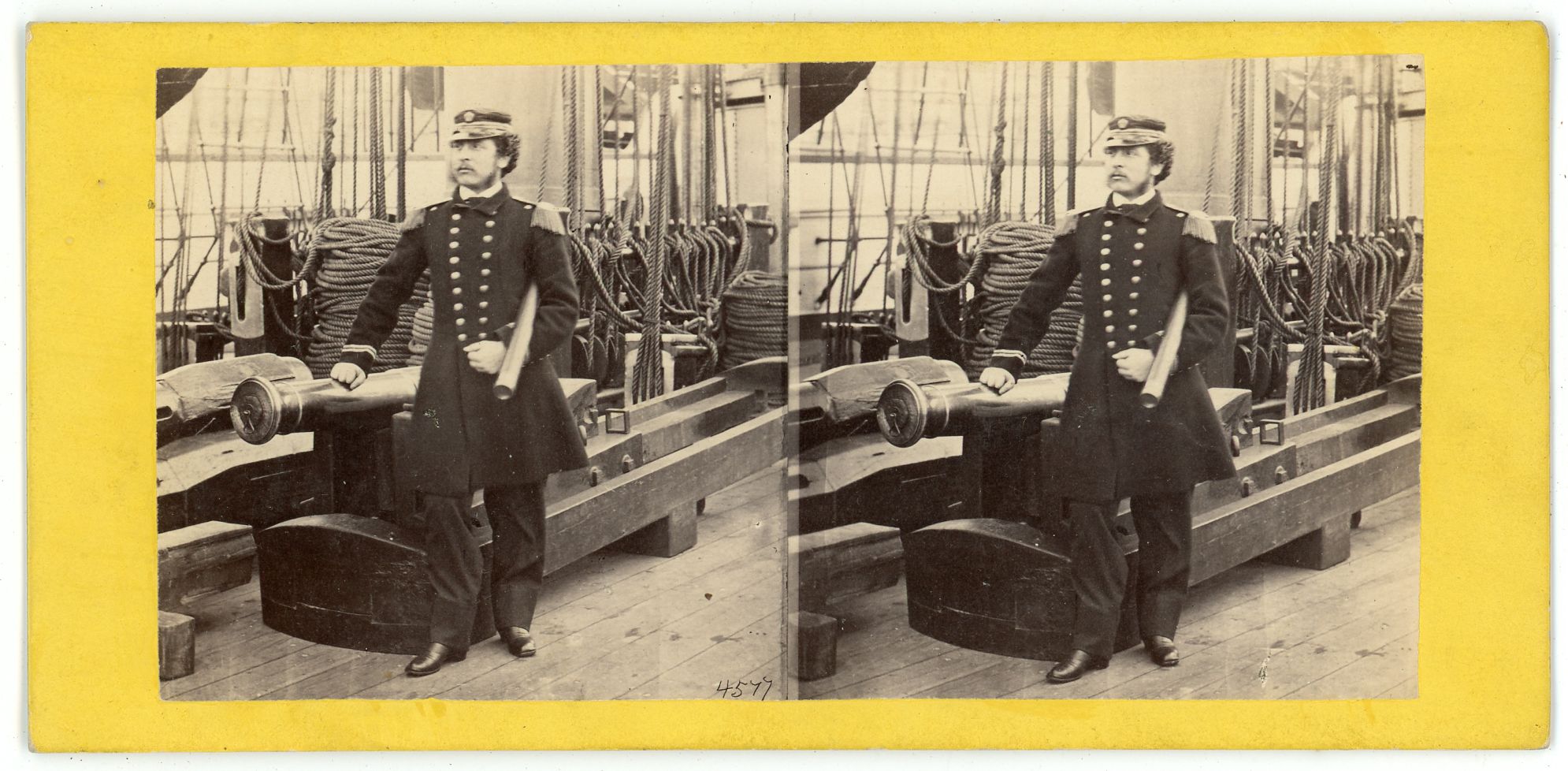
E&HT Anthony No. 4577. Sotto tenente Di Gascello, Sig. Sattembini on board of the Italian man-of-war Re Galantuomo, NY Harbor, 1862. [sic]
To-day these distinguished visitors dine at the Italian Legation. It is understood that they will attend the Secretary of State as National guests at Gettysburg.
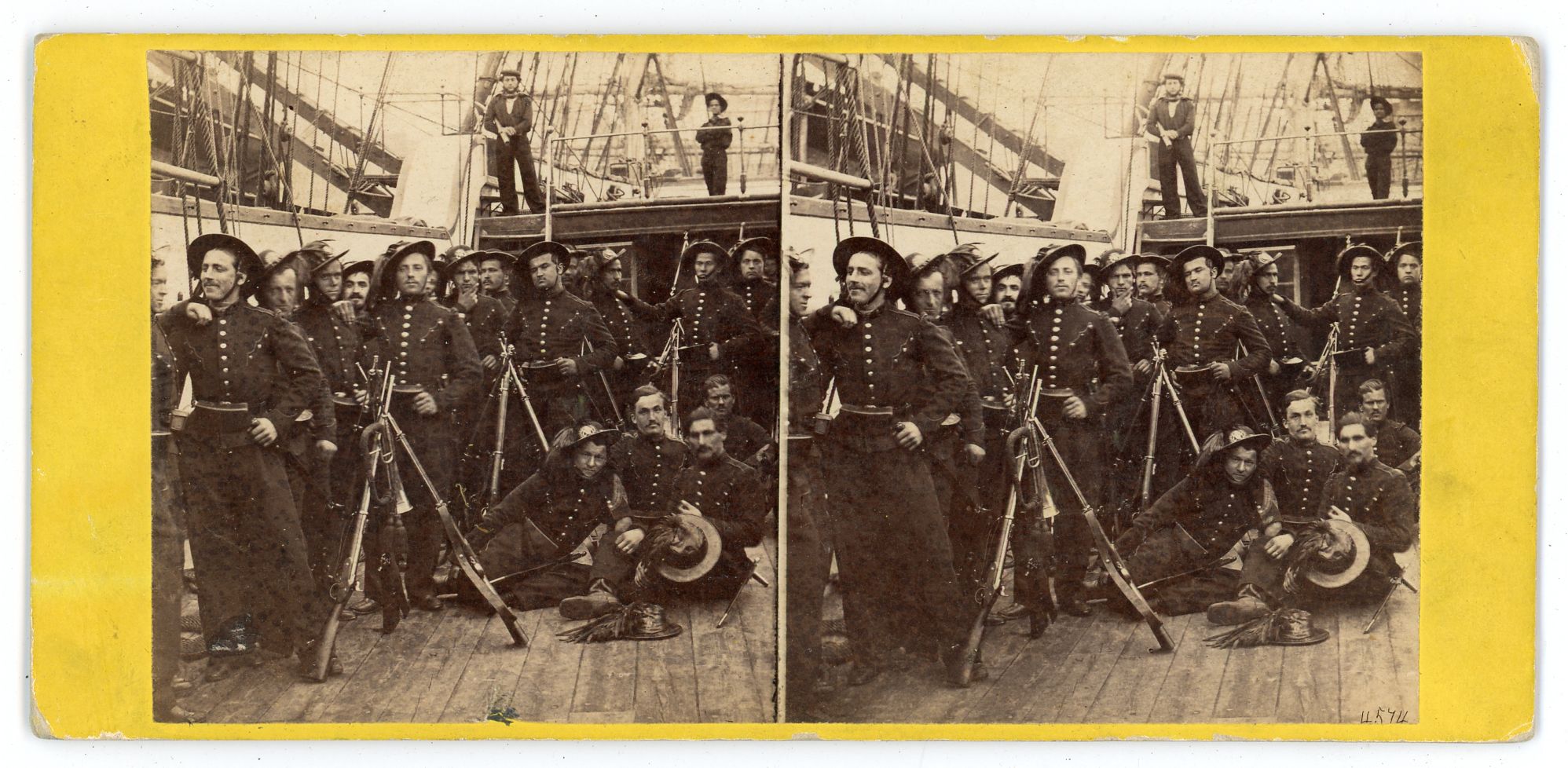
E&HT Anthony. No. 4574. Group of Soldiers at rest, on board the Italian man-of-war Re Galantuomo, in NY Harbor, 1862. [sic]
To illustrate the excitement generated by the Italian officers, here is an excerpt from the NY Times of Dec. 3, 1863, regarding the Re d’Italia:
An elegant entertainment was given last evening on board the new Italian frigate Re d’Italia, now lying at her dock in Hoboken. This magnificent vessel, the finest probably of all the naval structures of our great American shipbuilder, WILLIAM H. WEBB, Esq., is now completed, and will sail for the bay of Naples in 15 days. Her officers and crew arrived here from Naples in the line-of-battle ship Galantuomo on the 5th of November, and are now comfortably settled on board their new vessel, with which they all express themselves highly delighted. Before leaving New-York they were desirous of seeing something of our Metropolitan society, and Mr. WEBB anticipating their wishes, arranged for, and provided at his own expense the superb entertainment given last evening. Cards of invitation were issued to several hundred of our prominent citizens, who responded in large numbers to the invitation. Among the guests present were the Italian Minister Signor Bertinatti, Signor Anfoie, the Italian Consul General, Capts. Boukatoff, Federoffski, and Croun, of the Russian fleet, Commander Baldwin, U.S.N., Capt. Worden, U.S.N., Engineer Steimers, U.S.N., Judge Daly, Judge Woodruff, Judge Roosevelt, Postmaster Wakeman, Collector Barney, Jas. W. Gerard. Jos. Hokie, Capt. Chas. H. Marshall, Jas. W. Beekman, Rev. Dr. Cummings, D.D. Field, Dr. Sayre, Dr. Gardner, Wm.V. Brady, Horatio Allen, and others, together with a large number of ladies. The frigate was thrown open for visitors at 3 P.M., and from that time until late in the evening was thronged with ladies and gentlemen, who came to pay their respects to the Italian officers and to view their magnificent vessel. At 7 o’clock in the evening a most luxurious supper was provided for the guests in the ward-room, under the supervision of the famous caterer of the Maison Doree, Mons. MARTINEZ, assisted by his chief steward, FRANCIS SCHMIDT. There was no formal speechmaking on the occasion, though several gentlemen, on being called on for a toast, prefaced their sentiments by appropriate remarks. Mr. GERARD, among others, congratulated the company upon the fact that the elegant vessel which they all so much admired, was going to that beautiful and classic land Italia, the foremost among the nations in art and song, and the furthest advanced in freedom. He closed by offering the following: “The King of Italy and the King of Shipbuilders” — which was drank with great applause. After supper the guests repaired to the gun-deck, where dancing commenced, and was kept up till midnight, to the music of Dodworth’s Band. The officers of the Re d’Italia were all dressed in full uniform, and it was the unanimous expression of the ladies that they were the handsomest lot of men, taken as a body, they had ever seen. The decks of the vessel were brilliantly illuminated during the evening with calcium lights, and the engines were kept constantly in motion to enable the guests to witness the beautiful working of her machinery. The Re d’Italia has two engines, each of 800-horse power. They are similar to those of the Russian frigate Grand Admiral, built by Mr. WEBB in 1860. The cost of the Re d’Italia was $1,500,000. Her armament will be supplied after she reaches the Mediterranean. She carries with her from here only eight guns, furnished from the Galantuomo, which brought her officers and crew to this port. She will go into commission today, and it is in contemplation to give her a trial trip down the Bay previous to her departure for the Mediterranean.
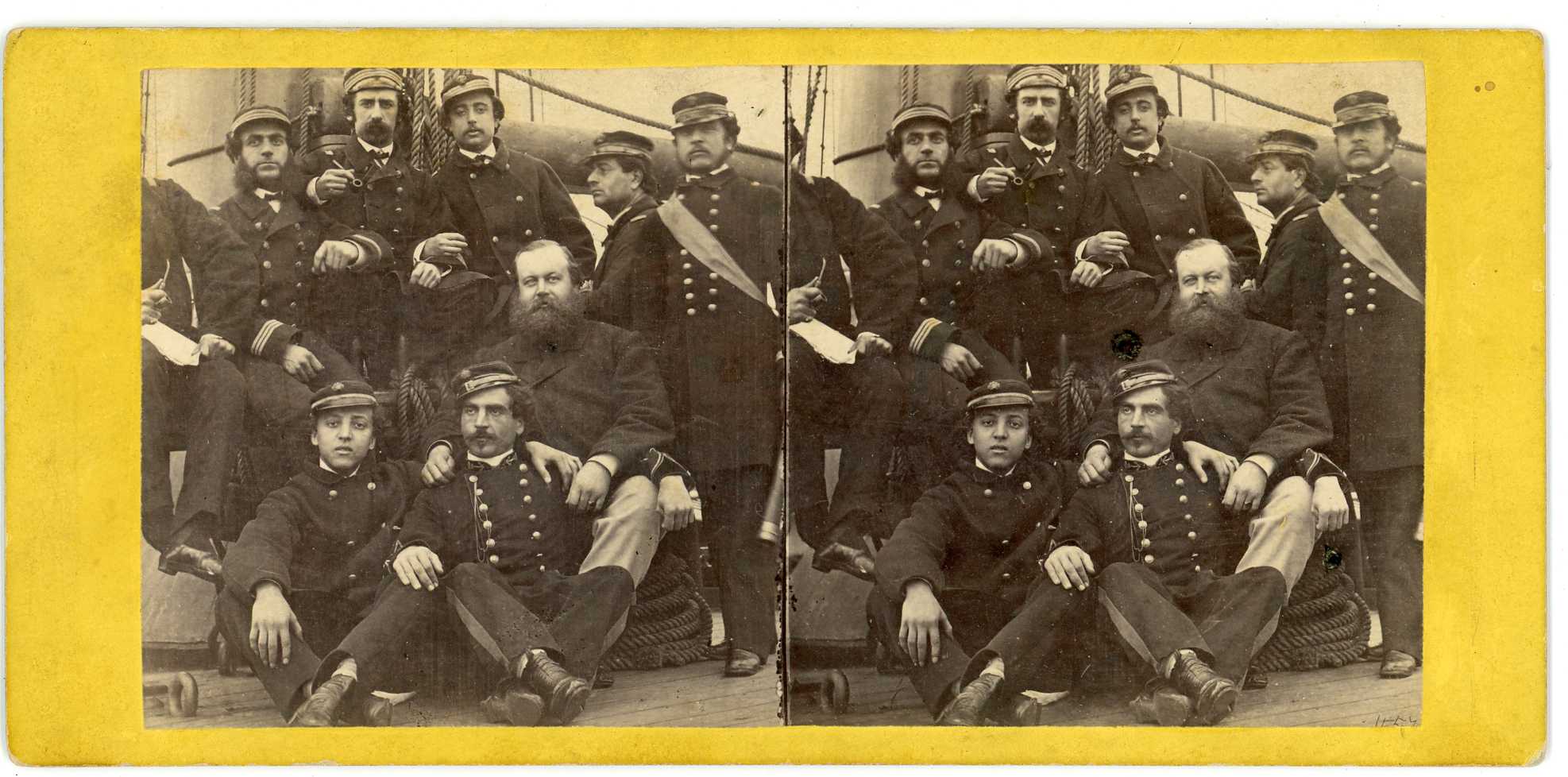
E&HT Anthony No. 4576. Group of Officers, on board the Italian man-of-war Re Galantuomo, in NY Harbor, 1862, [sic] the Commandant Comte Ulisse Tsolo.
Having delivered the sailors who would bring the Re d’Italia back to Italy, and having engaged with the various societal and professional constituencies in the US, the Re Galantuomo left NY. During the return voyage, the vessel faced violent storms, arriving in Naples in May 1864. On June 4, 1864, eighteen members of the ship’s crew were decorated with the Silver Medal for Military Valor for having distinguished themselves through self-denial, composure and courage, in the storms to which the steamship Re Galantuomo was subjected during the ocean crossing from New York to Italy.
In May 1866, the ship underwent armament replacement in Taranto. It then was on patrol duty in the Adriatic and Ionian Seas, playing no active part in the Third War of Italian Independence and the Battle of Lissa in 1866.
By the end of the war the ship was obsolete. It went on to serve as a training ship, and was decommissioned and scrapped in 1875.
All stereoviews are from the collection of the author.
Thanks to Michael Jacob for the translated copy of the naval history of the Re Galantuomo.
The New York Times online Archive has been most helpful in providing contemporary accounts related to the Re Galantuomo.
*While the tax on photographs was in place from Aug. 1,, 1864 until July 31, 1866, rarely photographs are found with revenue stamps that were cancelled prior to Aug. 1, 1864, or post July 31, 1866.